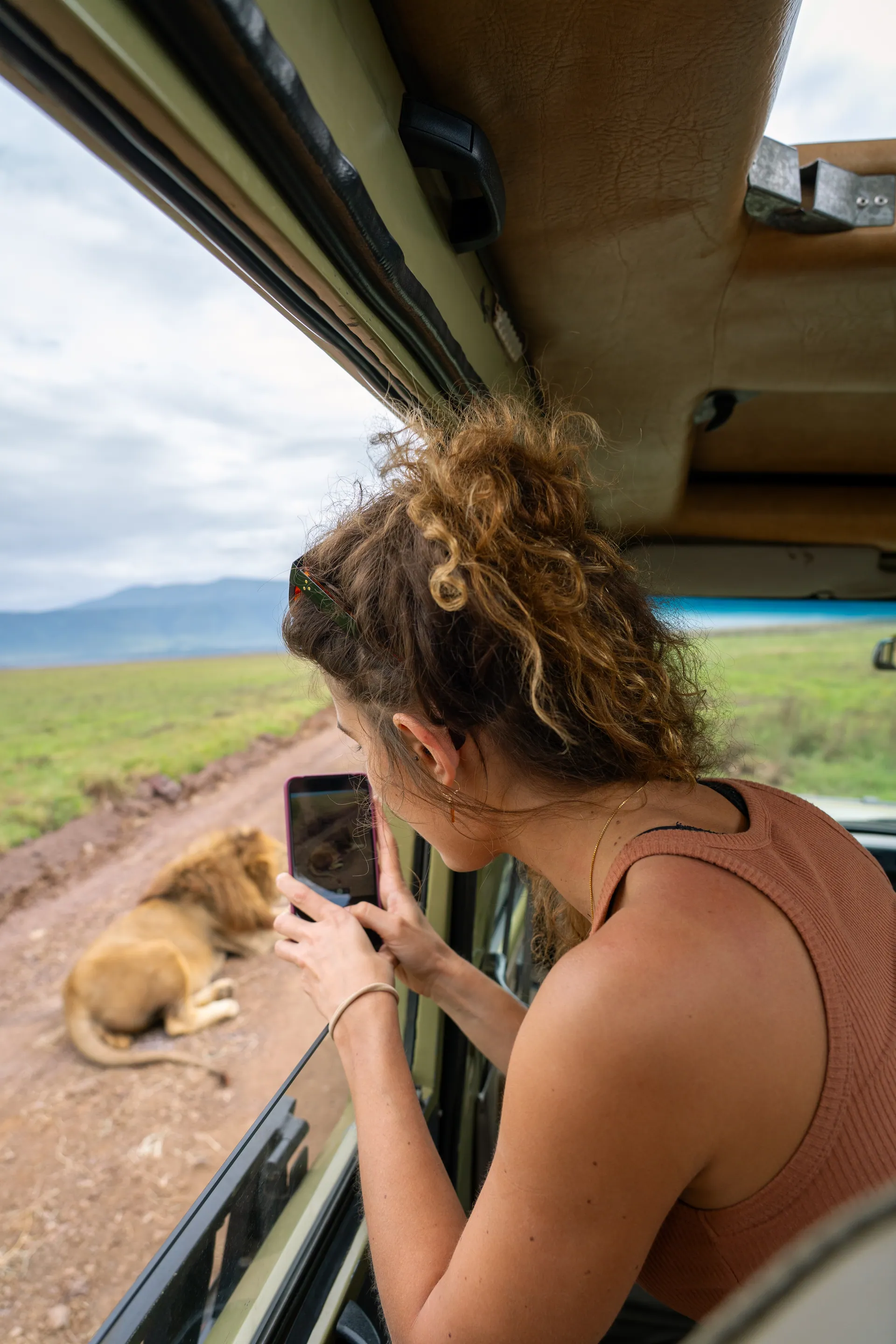
The migration of wildebeest is the year-round, clockwise loop of well over a million wildebeest, joined by roughly 300,000 zebra and many gazelles, around the Serengeti-Mara ecosystem of northern Tanzania and southern Kenya. The herds have no destination. They chase fresh grass and water, which means they chase the rain, and each animal covers 800 km or more per cycle.
This article explains why the herds move, how the route runs month by month, where and when the river crossings happen, and how to time a trip around calving, crossings or open-plains herds. Counts and dates differ between surveys and between years, so you will see ranges here instead of false precision.
Passionate Guides Tanzania runs private migration safaris out of Arusha, and our founder has guided in Tanzania since 2012.
Why the wildebeest migrate and why it matters
Wildebeest migrate because the grass and water they need are never in one place all year. Rainfall decides where the best grazing is, and the herds follow it.
What drives the herds
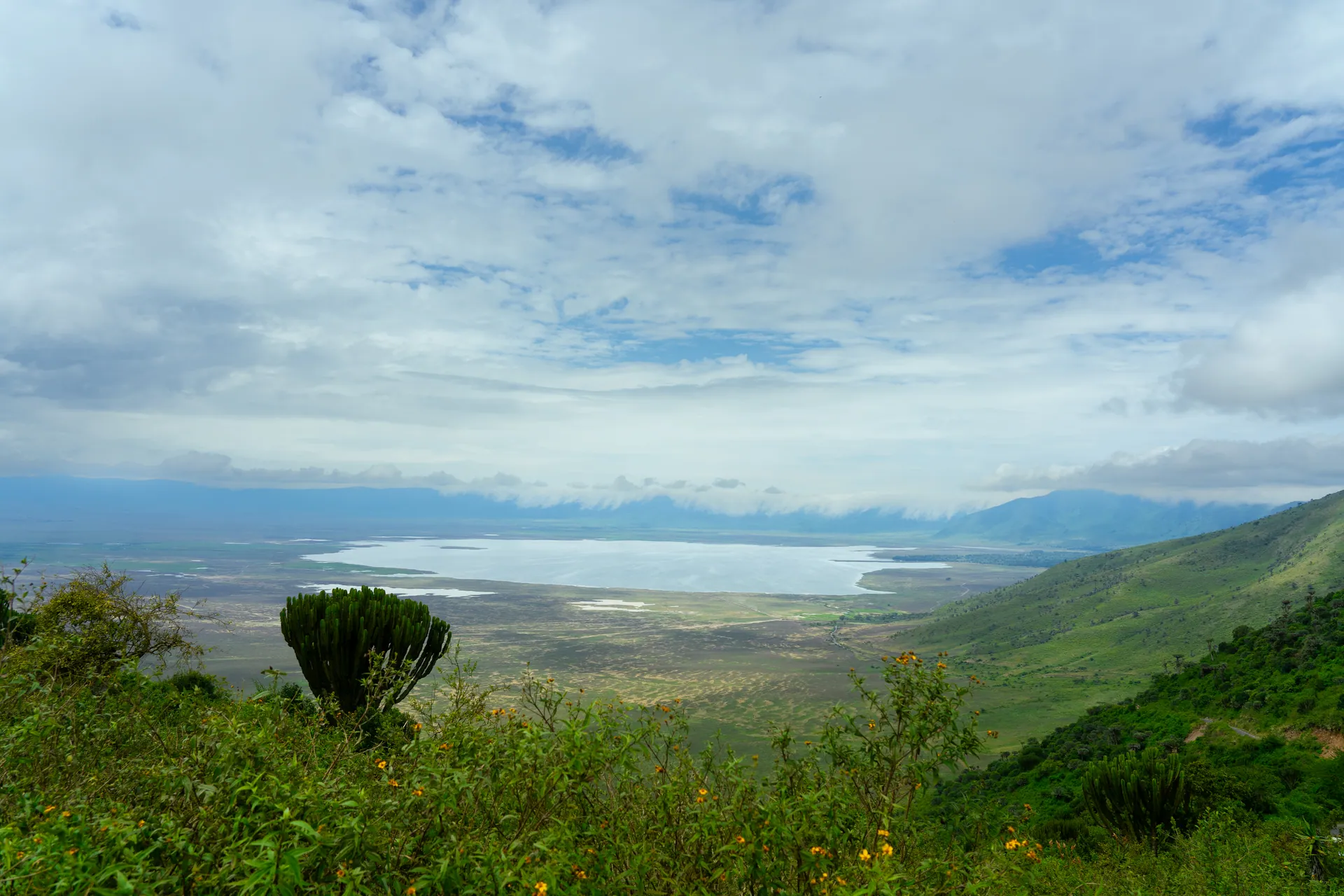
Rain is the trigger. The southern plains of the Serengeti and the Ngorongoro Conservation Area sit on volcanic soils that grow short, mineral-rich grass in the wet season. That grass dries out quickly once the rain stops, so the herds move north and west toward areas where grazing and water last longer. When the short rains return around early November, they turn south again. Scientists have not settled how wildebeest sense distant rain. Some experts think they react to far-off thunderstorms, but there is no firm proof.
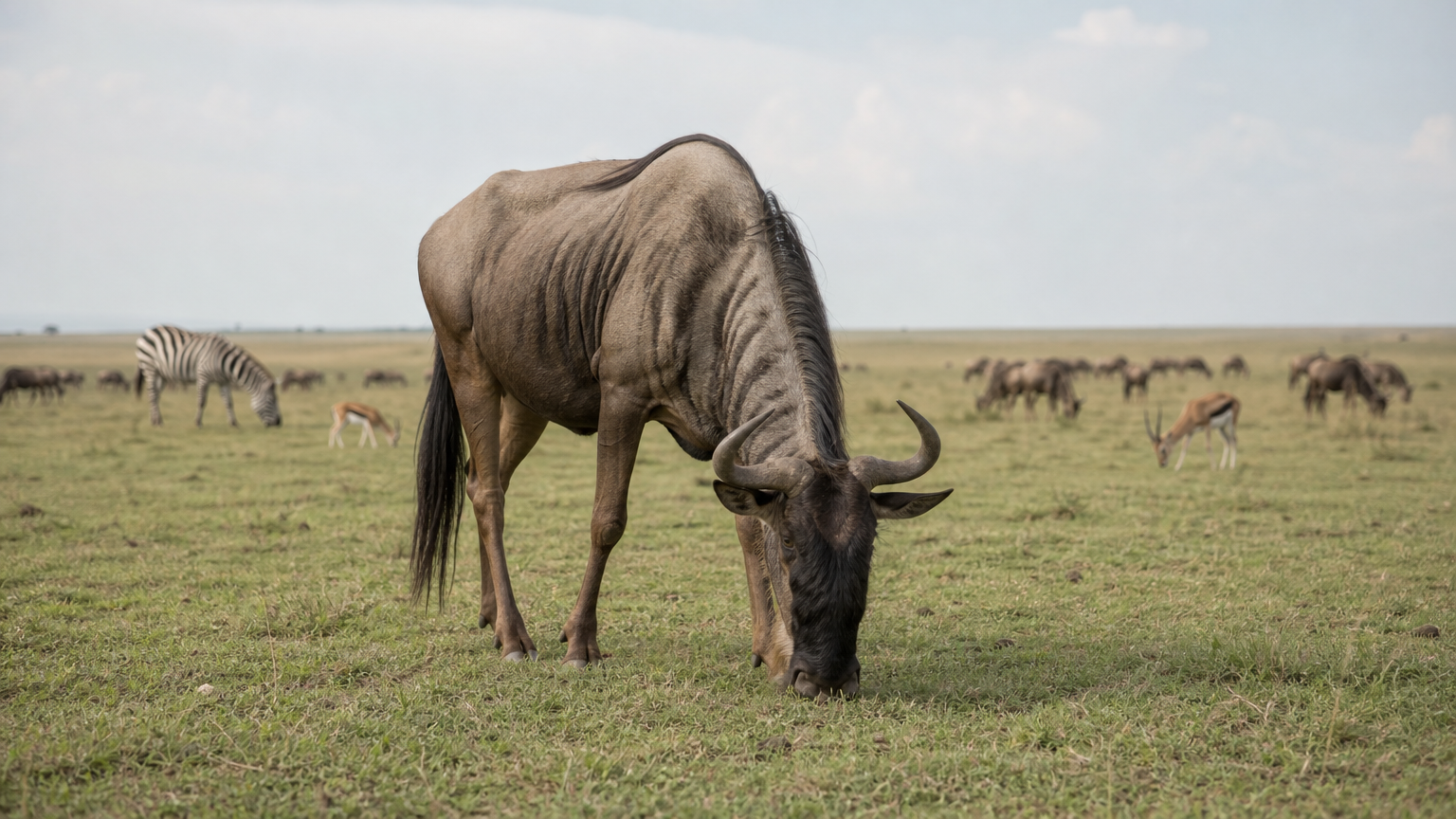
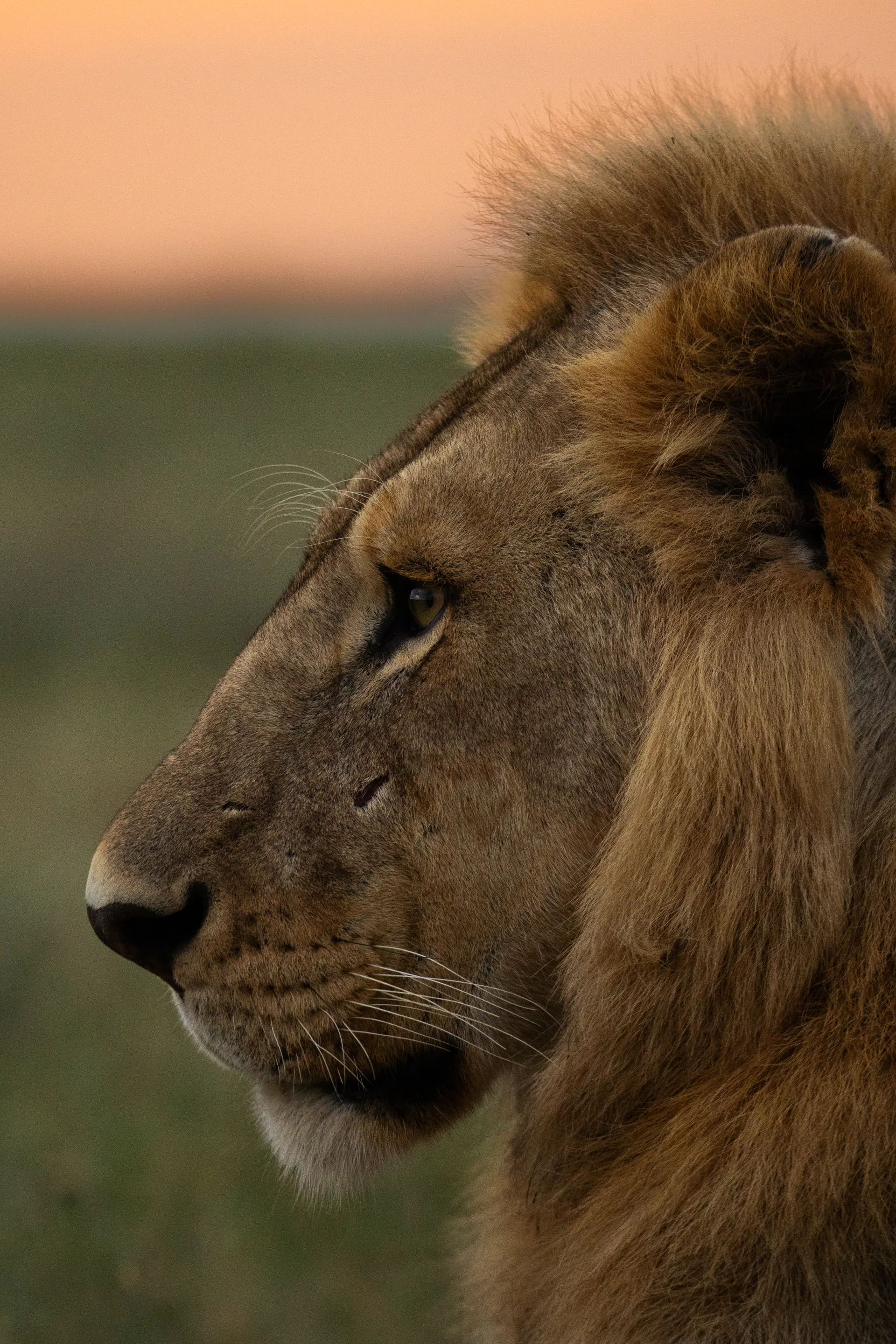
Other animals shape the pattern too. Zebra arrive first and crop the tall, coarse grass. Wildebeest follow and eat the shorter shoots that sprout afterward. Thomson's gazelles come last and take the tender growth near the ground. Predators such as lions, hyenas, cheetahs and crocodiles travel with the herds. About half a million calves are born each year, most of them within a two to three week window in February, which is why calving season is one of the migration's major events.
The herds do not follow a calendar. They follow rain, and the calendar only describes where the rain usually falls.
Why the migration matters
This is one of the largest overland animal migrations on Earth, and it holds the Serengeti-Mara ecosystem together. The grazing order keeps the plains in balance, and the herds feed a large predator population. Thousands of animals die on the way and thousands more are born, so the cycle renews itself.
For you as a traveler, the cause explains everything about planning. Because rain sets the schedule, month-by-month maps are guidelines, and a season can arrive early or late by weeks. That is why you should pick a goal, build in extra days, and rely on a guide who tracks the herds daily.
How the Great Migration moves through the year
The herds travel a clockwise loop. They calve in the south from December to March, move north-west through the Western Corridor by June, reach the northern Serengeti and the Masai Mara by August, and return south from October.
The route, month by month
An 800 km loop averages about 2 km a day over 365 days, but the animals do not move evenly. They graze in place for weeks, then push on in long columns. The table shows the typical pattern.
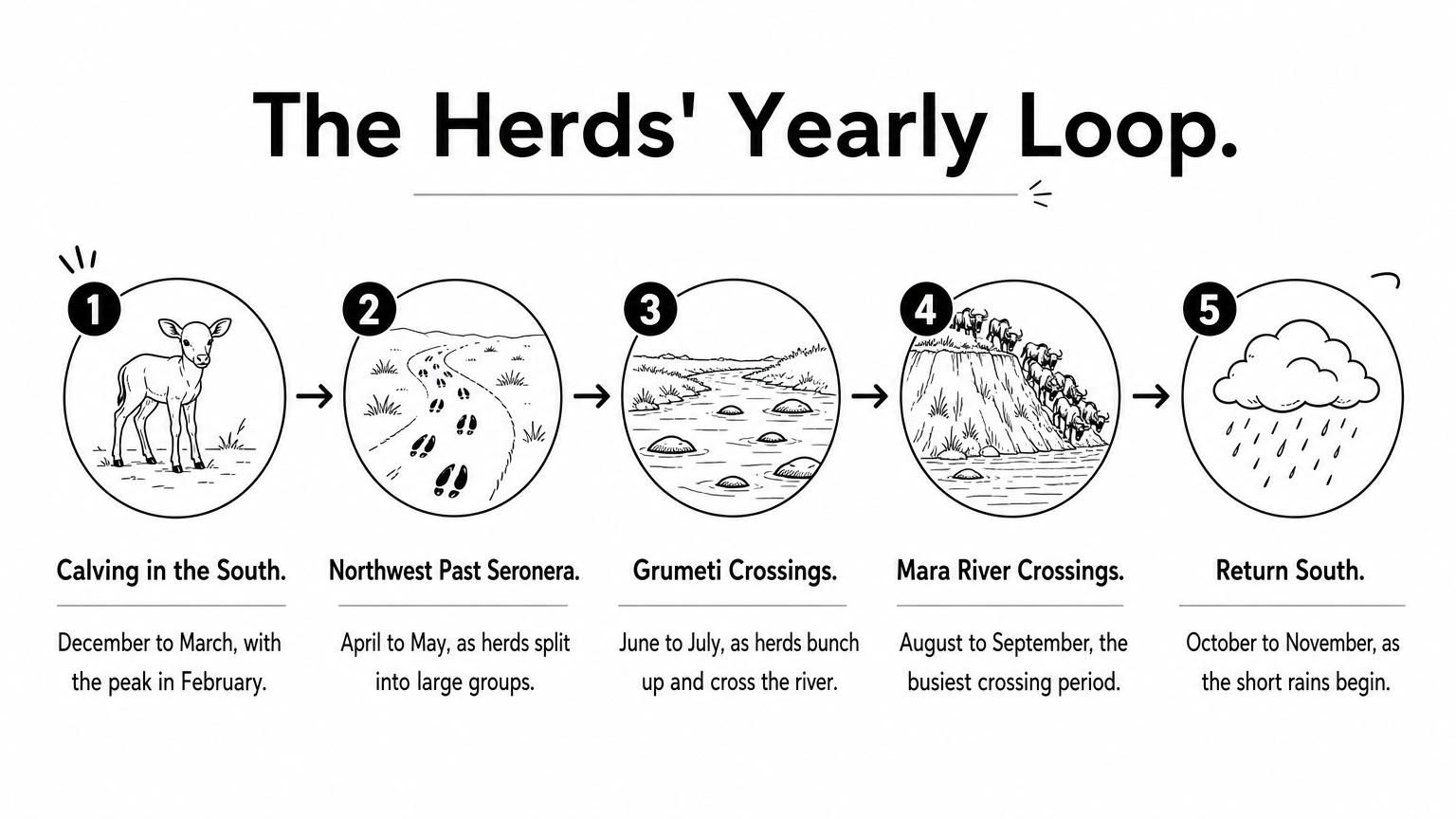
| Months | Where the herds are | What is happening |
|---|---|---|
| December to March | Southern plains: Ndutu, southern Serengeti, Ngorongoro Conservation Area | Calving, with the peak in February |
| April to May | Moving north-west past Moru Kopjes and Seronera | Long rains, herds split into large groups |
| June to July | Western Corridor and Grumeti River, then north | Herds bunch up, cross the Grumeti, push north |
| August to September | Northern Serengeti (Kogatende, Lamai) and the Masai Mara | Mara River crossings |
| October to November | Mara, then south through Loliondo and the Lobo area | Return as the short rains begin |
Why the loop crosses into Kenya and back
The Serengeti and the Masai Mara are one ecosystem. The border is a line on a map, and the herds ignore it. In the dry months the southern plains lose their grass, while the north and the Mara still hold grazing and water. So large numbers reach the Mara from roughly August to October, then head south when the short rains green the plains again.
You may see the question "is the Great Migration in Kenya in 2026?" The cycle repeats every year, so yes, the herds return to Kenya each year. Exactly when depends on that year's rain. Not every animal crosses into Kenya either. Many linger along the Mara River, and herds sometimes cross north one day and back south a few days later.
The migration has no start or end. It is a loop, and where you join it depends on what you want to see.
Where and when the river crossings happen
The famous crossings happen on the Mara River in the northern Serengeti, mainly from late July to early September, and sometimes into October. They are the moment most people picture when they think of the migration.
The Mara and Grumeti crossings
Look for the Mara River crossings around Kogatende and Lamai in northern Tanzania, and on the Kenyan side inside the Masai Mara. Further south, the Grumeti River in the Western Corridor sees crossings in June and July. It is a series of pools and channels, so those crossings are smaller and less dramatic than the Mara's.
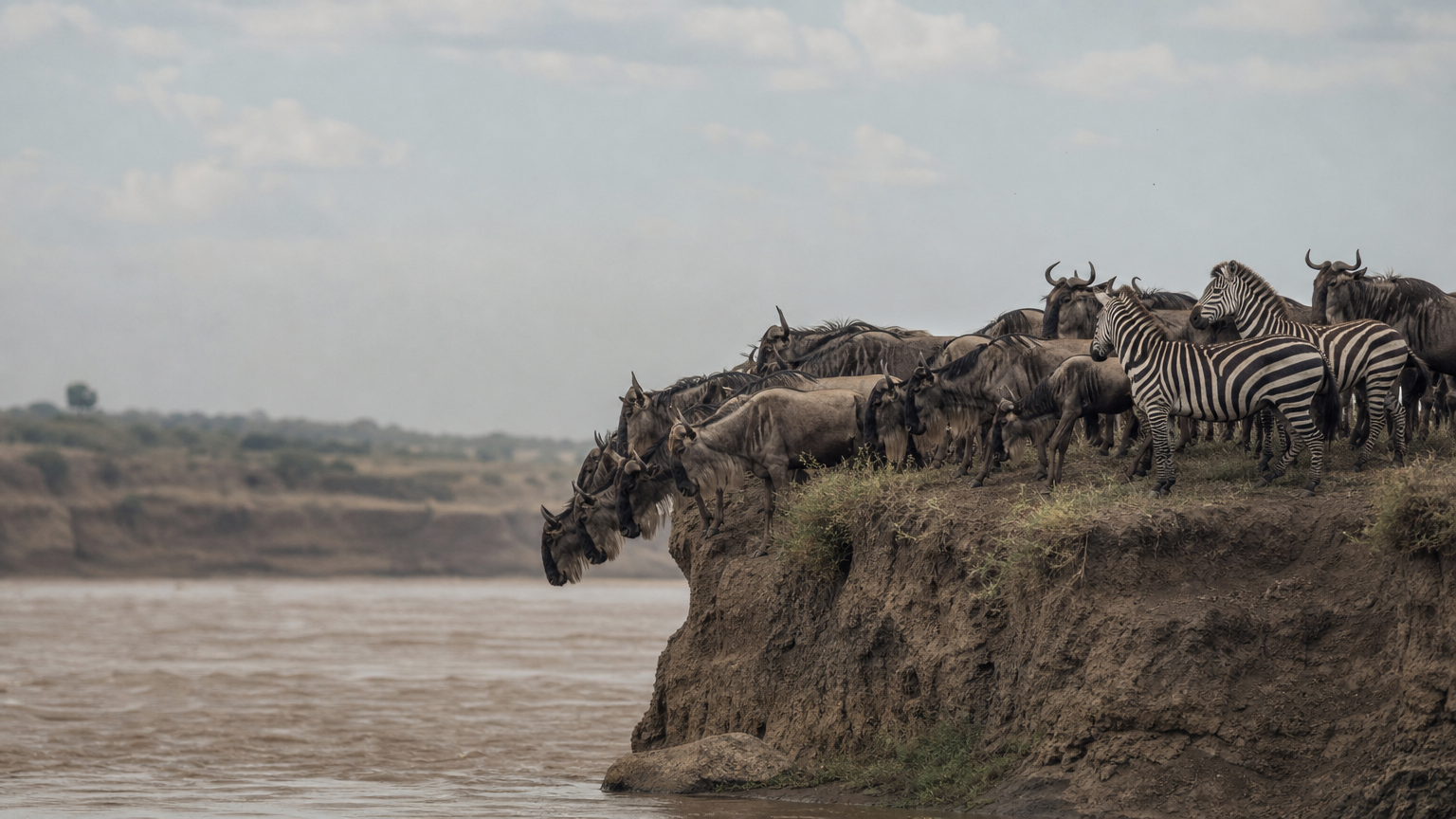
No one can promise you a crossing on a given morning. Herds gather on a bank, hesitate for hours or days, then something triggers a plunge. Experienced guides read the behavior, such as restless columns and herds massing at the water's edge, and position the vehicle in advance. Patience is the main requirement. Plan several days near the river rather than one.
A crossing cannot be scheduled. You improve your odds by staying near the river for several days with a guide who reads the herds.
What the journey costs the herds
Steep banks, strong current and crocodiles make the Mara the hardest obstacle on the route. Animals die from falls, drowning and crushing as thousands scramble up the far bank, and lions wait in the riverside shrubs.
Across the whole cycle, one widely cited estimate puts annual deaths at about 250,000 wildebeest, from predation, drowning, thirst, hunger and exhaustion. That is roughly half the number of calves born each year. Mortality is part of how the system works, and it feeds crocodiles, vultures and big cats.
How to plan a trip to see the migration
There is no single best place to see the migration. The best place depends on what you want to see, so choose your goal first and then the month and the base.
Match your goal to the season
The herds are never absent from the ecosystem, so every month offers something. The table links goals to timing and location.
| Goal | Best months | Where to base | Worth knowing |
|---|---|---|---|
| Calving and newborns | December to March, peak in February | Ndutu and southern Serengeti | Predators hunt newborns, afternoon rain is common in March |
| Big herds, fewer crowds | Late March to May | Central and Western Serengeti | Wet season, lower lodge rates, slippery plains need 4x4 |
| Grumeti crossings | June to July | Western Corridor | Smaller and less spectacular than the Mara |
| Mara River crossings | Late July to September, sometimes October | Northern Serengeti or Masai Mara | Busiest period, crowds gather at crossing points |
| Herds grazing the Mara plains | September to October | Masai Mara | Dry, sunny weather and open grassland |
Practical tips for the trip
Give yourself time, because timing shifts with the rain. Spend several nights in each area, choose camps close to where the herds are rather than a long drive away, and consider mobile camps that move with the season. To avoid crowds in the Mara, stay in a private conservancy bordering the reserve, or travel in the green season.
At Passionate Guides Tanzania, our 8 Days Southern Serengeti Migration Safari covers Tarangire, the Serengeti and Lake Ndutu during calving season. February is the best month for calving, and Lake Ndutu is the main target from December to April. If you want the northern herds, an itinerary through both the Masai Mara and the Serengeti, such as our 8-day Kenya & Tanzania safari, lets you follow the animals across the border. Tell us your dates and your priority, and your private guide will tell you where the herds are likely to be. We drive our own Toyota Landcruiser 4x4 vehicles, which helps on slick wet-season tracks.
Pick one goal, calving or crossings, then build the dates and the camp around it.
Seeing the migration for yourself
The migration of the wildebeest is a rain-driven loop through the Serengeti and the Masai Mara. Calving comes in the south from December to March, the herds move north through spring, the Mara River crossings peak from late July to September, and the return south begins in October. Dates move with the rain, so choose your goal first, allow extra days, and book a guide who follows the herds.
If you want help matching the season to what you most want to see, talk to Passionate Guides Tanzania about your dates. We will suggest an itinerary, such as our Southern Serengeti migration safari, and a base that fit your plans.