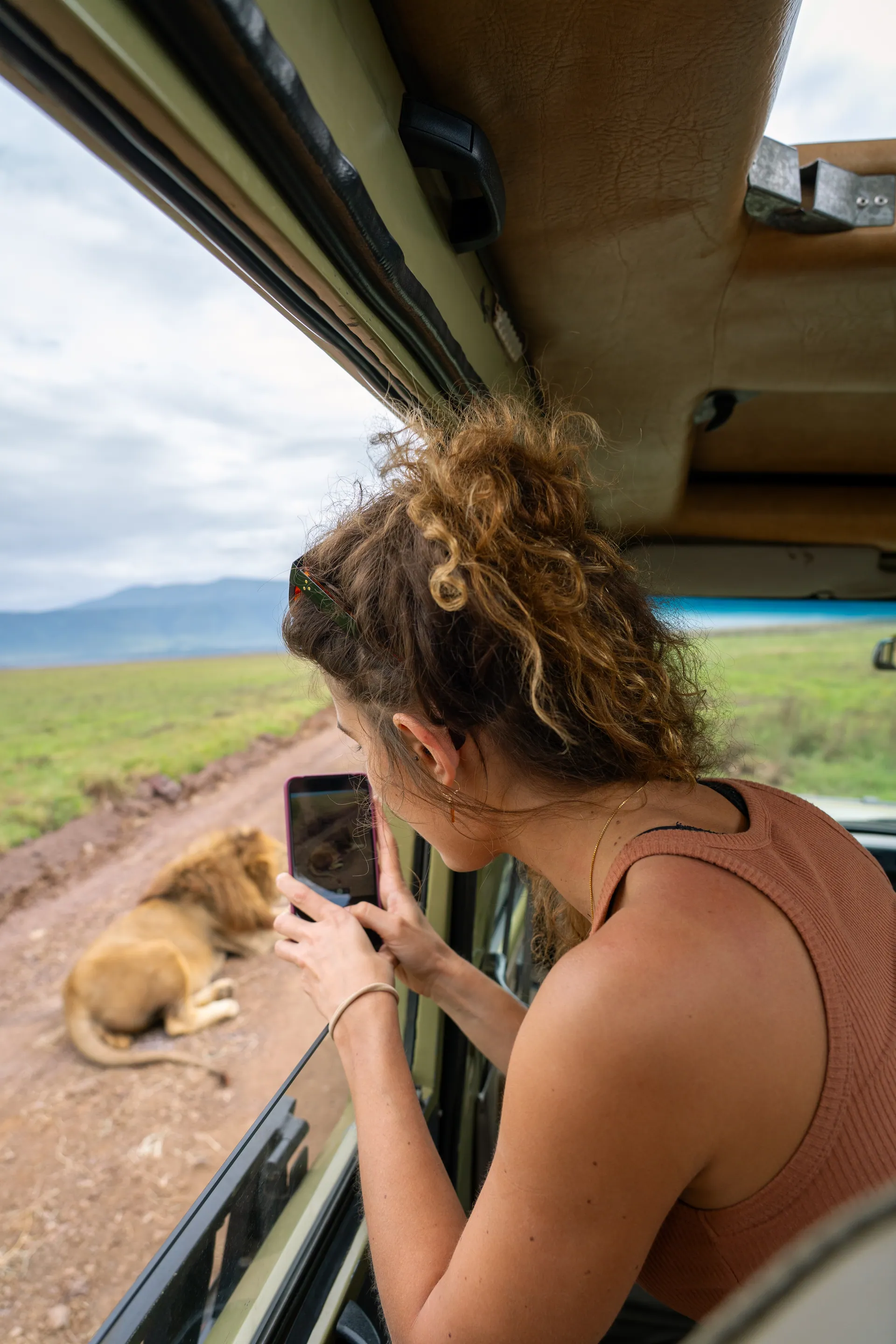
The short answer to safari Kenya vs Tanzania is that neither country wins outright. Choose Kenya if you want the easiest first trip, reliable rhino sightings, a slightly lower price and parks that sit close together. Choose Tanzania if you want bigger and emptier landscapes, the Great Migration for most of the year, Ngorongoro Crater, and room to add walking safaris or a Zanzibar beach stay. So is Kenya or Tanzania better for safari? It depends on your travel month, budget and trip length, not on which country has better animals.
The two countries share one ecosystem. The Serengeti in Tanzania and the Maasai Mara in Kenya are the same grassland split by a border, and the same lions, elephants and wildebeest cross it. What changes is how you reach the animals, how many vehicles share each sighting, what you pay, and what else the trip can include.
We run private safaris from Arusha in both countries, and we are based in Tanzania, so we say that up front. This article compares the two the way we explain it to guests. You will see why the choice matters, how wildlife, the migration, cost, crowds, access and safety compare, which trip styles suit each country, how to combine them, and a step-by-step way to decide.
Why the Kenya or Tanzania choice matters
One ecosystem, two different safaris
Kenya and Tanzania share the Serengeti-Mara ecosystem, so the big animals are the same on both sides of the border. Lions, elephants, buffalo, leopards, cheetahs and the wildebeest herds ignore the line on the map. What differs is everything around the animals: how far you drive, how many vehicles you share a sighting with, what the trip costs and what you can add to it.
Kenya is the compact, well-connected option. Its parks sit relatively close together, Nairobi has the busier international airport, and the lodge supply covers every price level. Tanzania is the larger and quieter option. More than a third of its land has some form of wildlife protection. Kenya has roughly 12% in national parks and reserves, rising to around a fifth once private and community conservancies are counted. That gap explains why Tanzania's parks feel so big and why conservancies matter so much in Kenya.
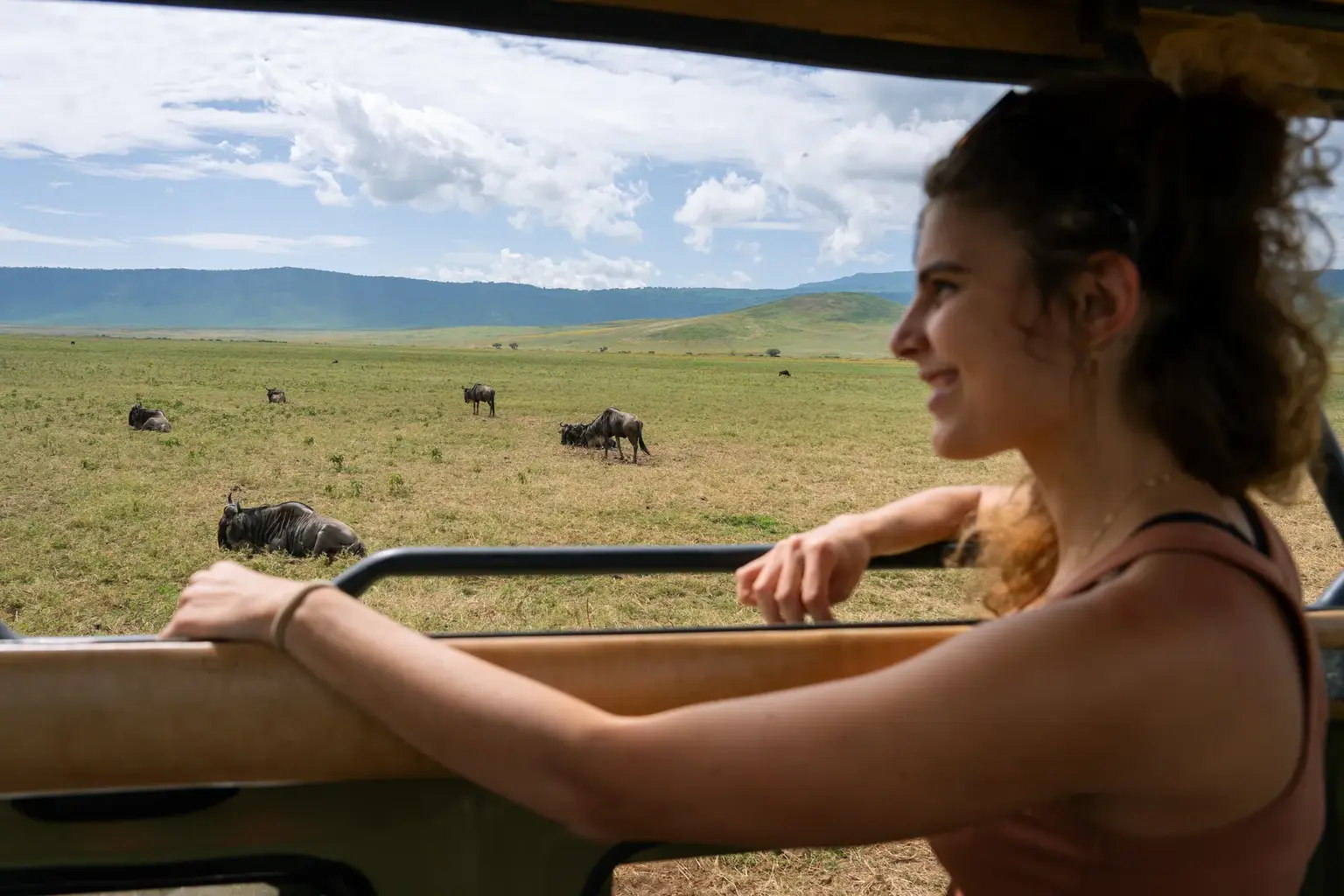
Same animals, different experience: the choice is about how you reach the wildlife, not what you will see.
What a wrong pick costs you
Most regret comes from timing and expectations, not from the country itself. A traveler who books the southern Serengeti in July hoping for wildebeest finds the herds far to the north. Someone who books the Mara in February sees plenty of resident wildlife but misses the calving spectacle. A guest who picks Tanzania mainly for rhinos may go home with a distant dark shape on the floor of Ngorongoro Crater.
Short trips make these mistakes worse. In six days, a full driving day from Arusha to the Serengeti takes a big share of your time unless you fly. The best camps for peak river-crossing season also often sell out 12 to 18 months ahead, so a late decision narrows your options before you have compared anything. Settling the Kenya or Tanzania question early protects the rest of the plan.
Wildlife and the Great Migration in each country
Big Five and rhinos
You can see all of the Big Five in both countries, and Kenya is the more reliable for rhinos. Nairobi National Park, Lake Nakuru and Ol Pejeta all hold black and white rhinos, and sightings are often close. In Tanzania your best chance is Ngorongoro Crater, and rhinos there are usually far from the road. Serengeti sightings are rarer still. If you plan to see all five animals on one trip and rhinos matter to you, that is Kenya's clearest advantage.
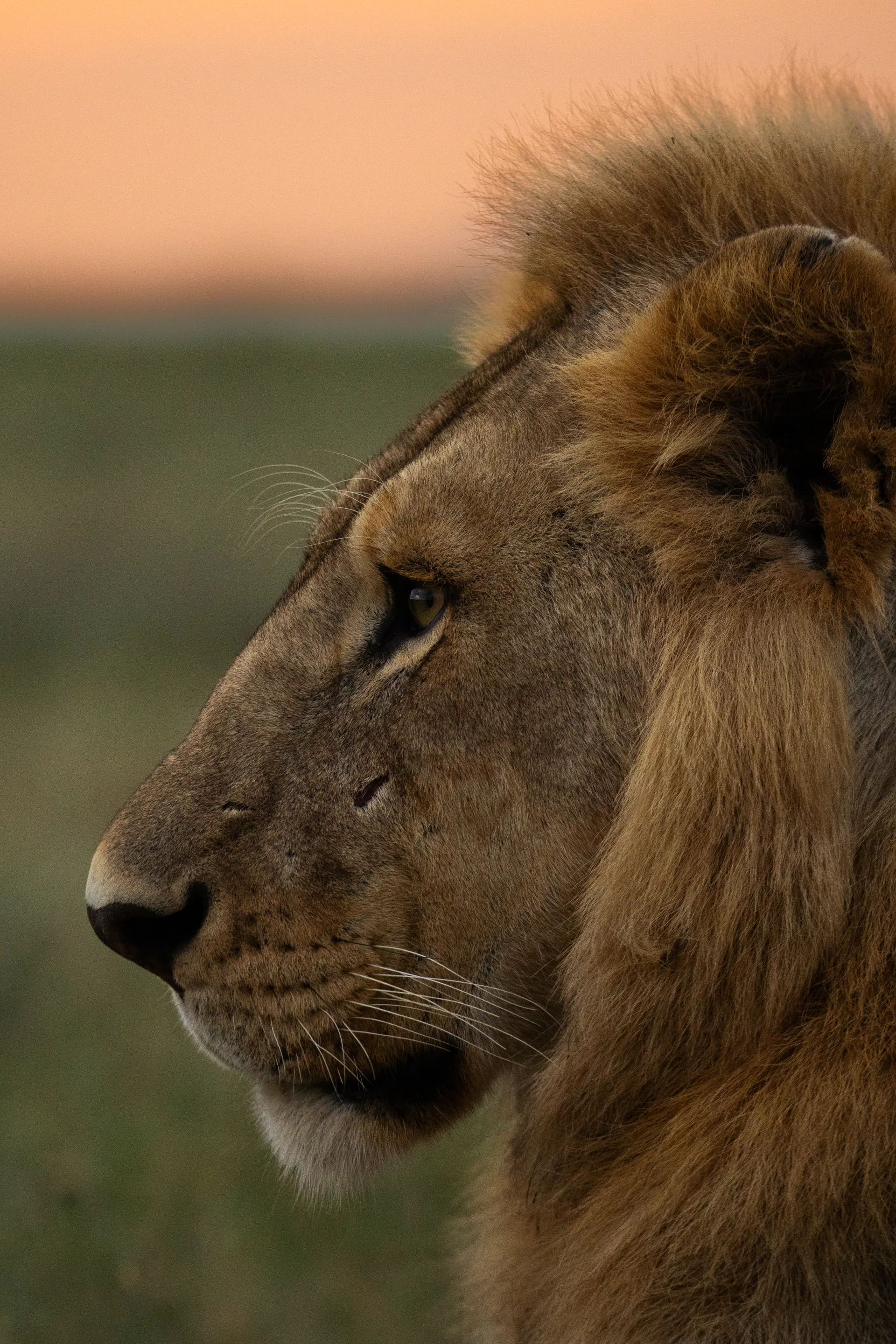
Lions, leopards, elephants and buffalo are close to equal. Both the Mara and the Serengeti have high predator numbers, so the quality of your guide matters more than the border when it comes to finding cats.
| Wildlife | Kenya | Tanzania |
|---|---|---|
| Rhinos | Reliable and often close: Nairobi National Park, Lake Nakuru, Ol Pejeta | Ngorongoro Crater and parts of the Serengeti, usually distant |
| Lions | Strong in the Mara and its conservancies | Strong in the Serengeti, Tarangire and Ngorongoro Crater |
| Leopards and cheetahs | Good in the Mara | Good in the central Serengeti |
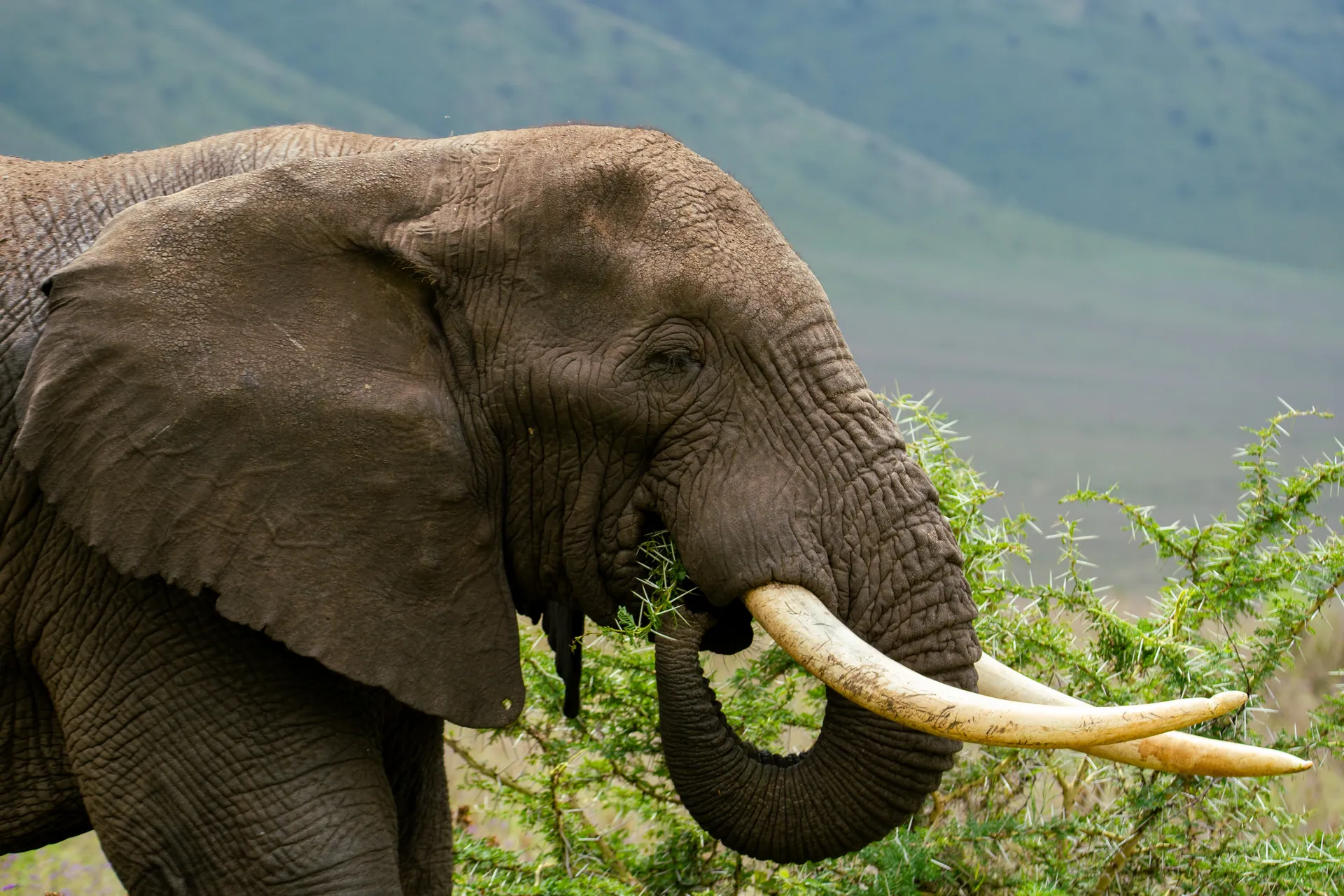
| Elephants | Large herds in Amboseli, plus Tsavo and the Mara | Tarangire, Serengeti and Ruaha |
| Chimpanzees | Only at a sanctuary in Ol Pejeta | Gombe Stream and Mahale Mountains, both remote |
| Gorillas | None | None (they live in Uganda, Rwanda and DRC) |
The Great Migration month by month
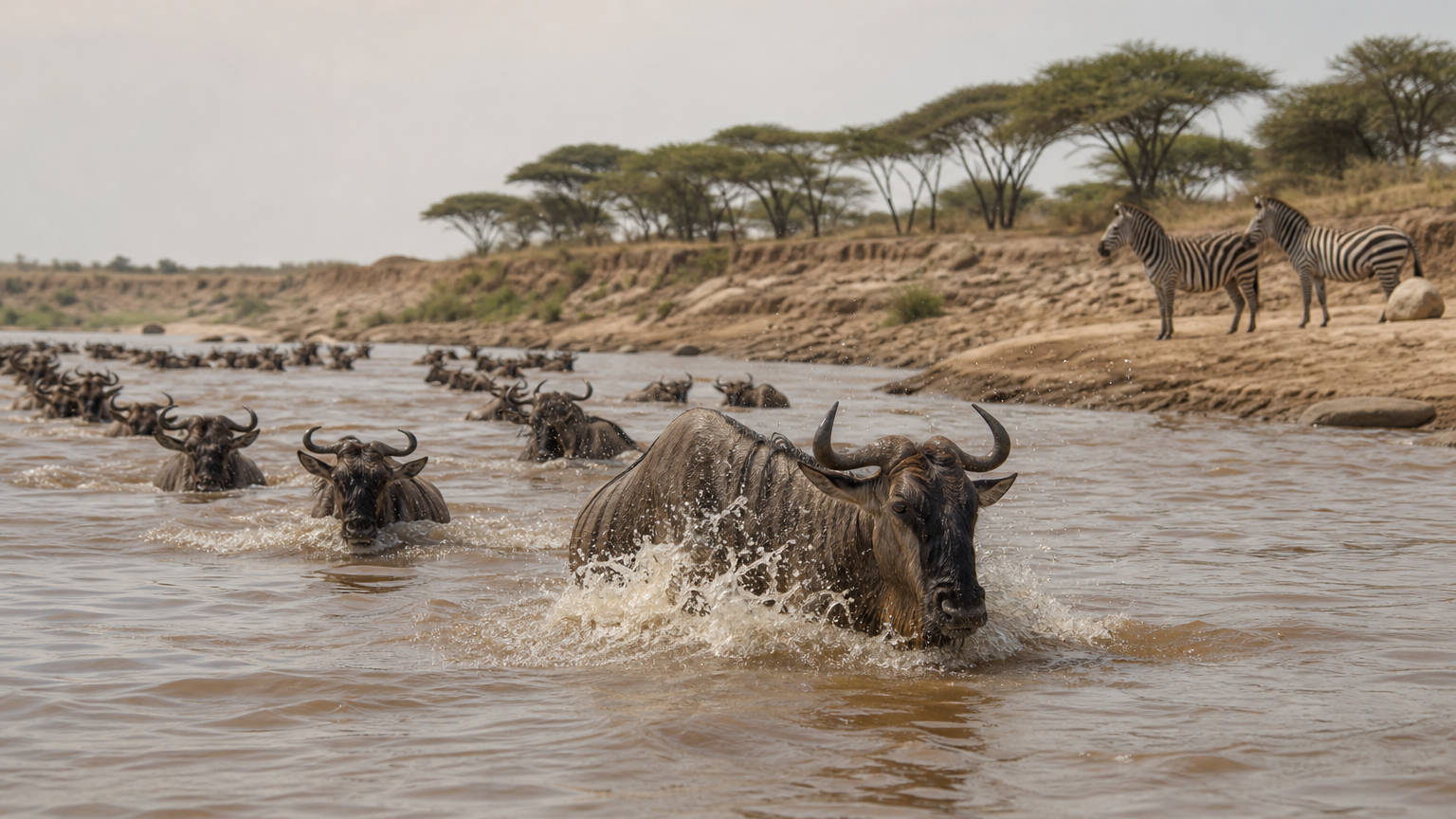
Tanzania offers the migration for most of the year, while Kenya hosts it only from about July to October. The herd of well over a million wildebeest, with zebra and gazelle alongside, moves in a loop through the Serengeti and into the Mara and back. Whichever country you choose, the herds' location in your travel month should decide where you sleep.
| Months | Where the herds are | Where to be |
|---|---|---|
| January to March | Southern Serengeti and Ndutu plains, calving peaks in February | Tanzania |
| April to May | Moving north through the central Serengeti toward the Western Corridor | Tanzania (green season, fewer visitors) |
| June to July | Western Corridor, Grumeti River crossings, then northward | Tanzania |
| July to October | Northern Serengeti and the Maasai Mara, Mara River crossings, peak usually August and September | Either country |
| November to December | Heading south again | Tanzania |
The Mara River crossings are the most famous scene, and you can watch them from either bank. They are never guaranteed on a given day, so plan at least two or three days in the area. If calving is your goal, only a southern Serengeti calving safari around Lake Ndutu delivers it. Hundreds of thousands of calves are born within a few weeks, and the predators gather around them.
Elephants, cats and everything else
For elephants, Kenya's Amboseli is the standout, with big herds and Kilimanjaro rising behind them on clear mornings. Tanzania's answer is Tarangire, where herds weave between baobab trees. Tarangire is at its best in the dry season, roughly June to October, when animals gather near the river.
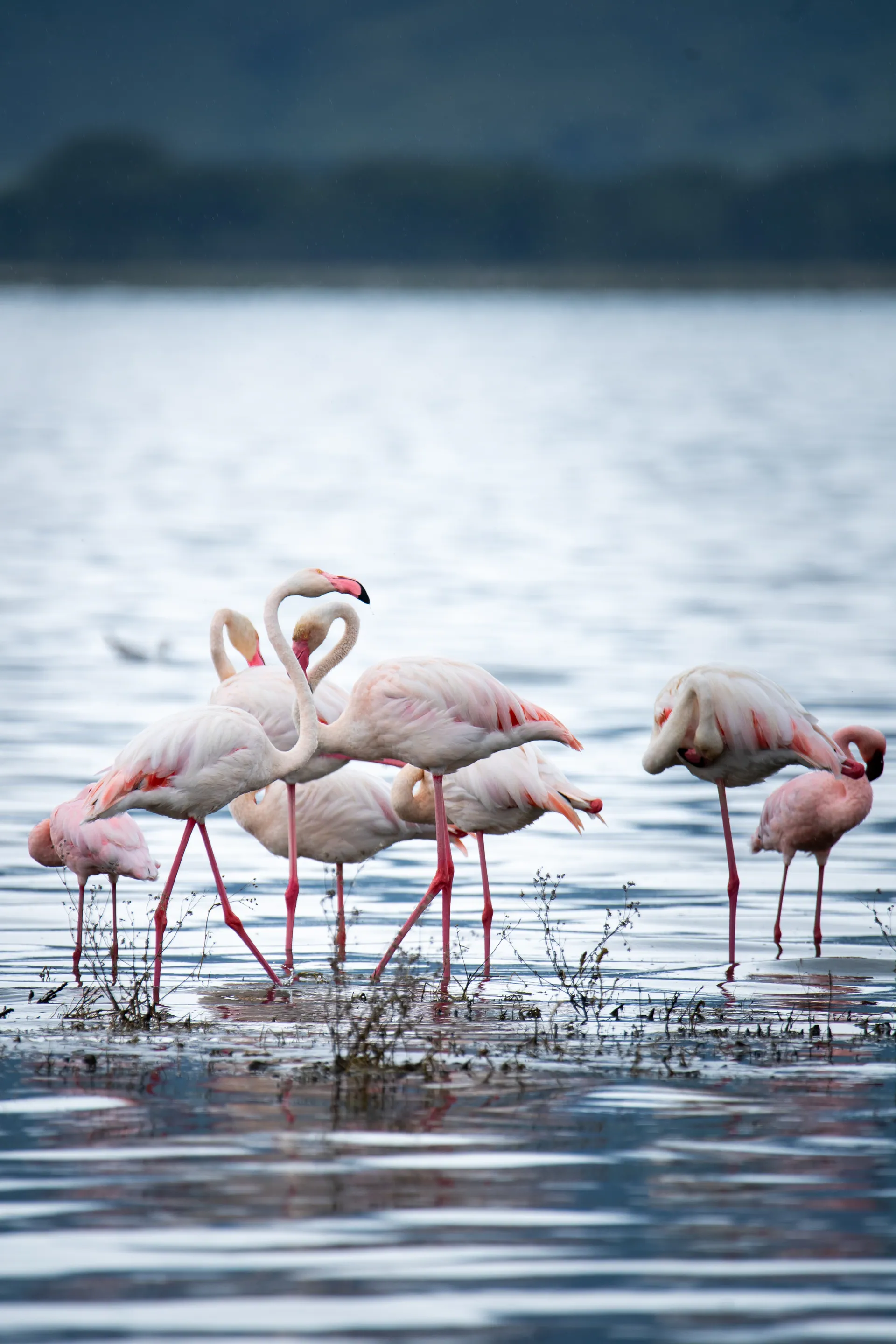
Birders will be happy in both. Each country records more than 1,000 bird species, with flamingos at Lake Nakuru in Kenya and at Lake Manyara and Lake Natron in Tanzania. Primates favor Tanzania, because chimpanzee trekking in Gombe and Mahale is possible there. If gorillas are on your list, that is a separate trip to Uganda or Rwanda, and we can add either to a safari.
What a Kenya vs Tanzania safari costs
Daily rates and park fees
A private guided safari commonly starts at about $300 per person per day in Kenya and $350 in Tanzania. These are entry-level private rates, not quotes from any one operator. The cost of a safari in Kenya is lower mainly because it has more budget lodges outside the parks, more shared-vehicle options, and a bigger tourism market, which brings competition. Upper-end camps in both countries commonly run from $500 to $3,000 or more per person per night.
Park fees have narrowed the gap. The Maasai Mara has set its fees above Serengeti levels, with peak-season fees roughly double low-season fees, while Serengeti fees have been lower. Ngorongoro Crater adds its own charges on top. Governments revise these figures often, so confirm current published fees before you compare quotes.
A worked example for two travelers
Here is a seven-day private safari for two travelers at those starting rates.
| Item | Kenya | Tanzania |
|---|---|---|
| Rate per person per day | $300 | $350 |
| One traveler, 7 days | $2,100 | $2,450 |
| Two travelers, 7 days | $4,200 | $4,900 |
| Difference | $700 more |
Add a Serengeti balloon flight at $550 per person and the Tanzania total rises by $1,100 to $6,000 for two. Neither total includes international flights, tips, visas or insurance. Treat the $700 gap as a rough guide, because season, lodge tier and group size can move it either way.
Kenya is cheaper by about $50 per person per day at entry level, a gap that season and lodge tier can easily erase.
What moves the price most
Season and style change the bill more than the country does. These are the biggest levers:
- Peak months: July to October and the Christmas period cost the most in both countries.
- Private or shared vehicle: a private Land Cruiser costs more per person than a shared one, but it gives you control of pacing.
- Fly-ins: small-plane flights between parks often run a few hundred dollars per person each way, which pays off on long drives.
- Where you sleep: conservancy and in-park camps cost more than lodges outside the gates.
- Green season: April and May bring lower rates and fewer vehicles, with a higher chance of rain.
Crowds, park size and landscapes
Vehicles at sightings
The Maasai Mara is much smaller than the Serengeti. The Serengeti National Park alone is roughly ten times the size of the Mara reserve, so animals have more room and vehicles spread out more. In peak months, a single lion sighting in the Mara can draw a dozen vehicles, because guides radio each other and converge quickly.
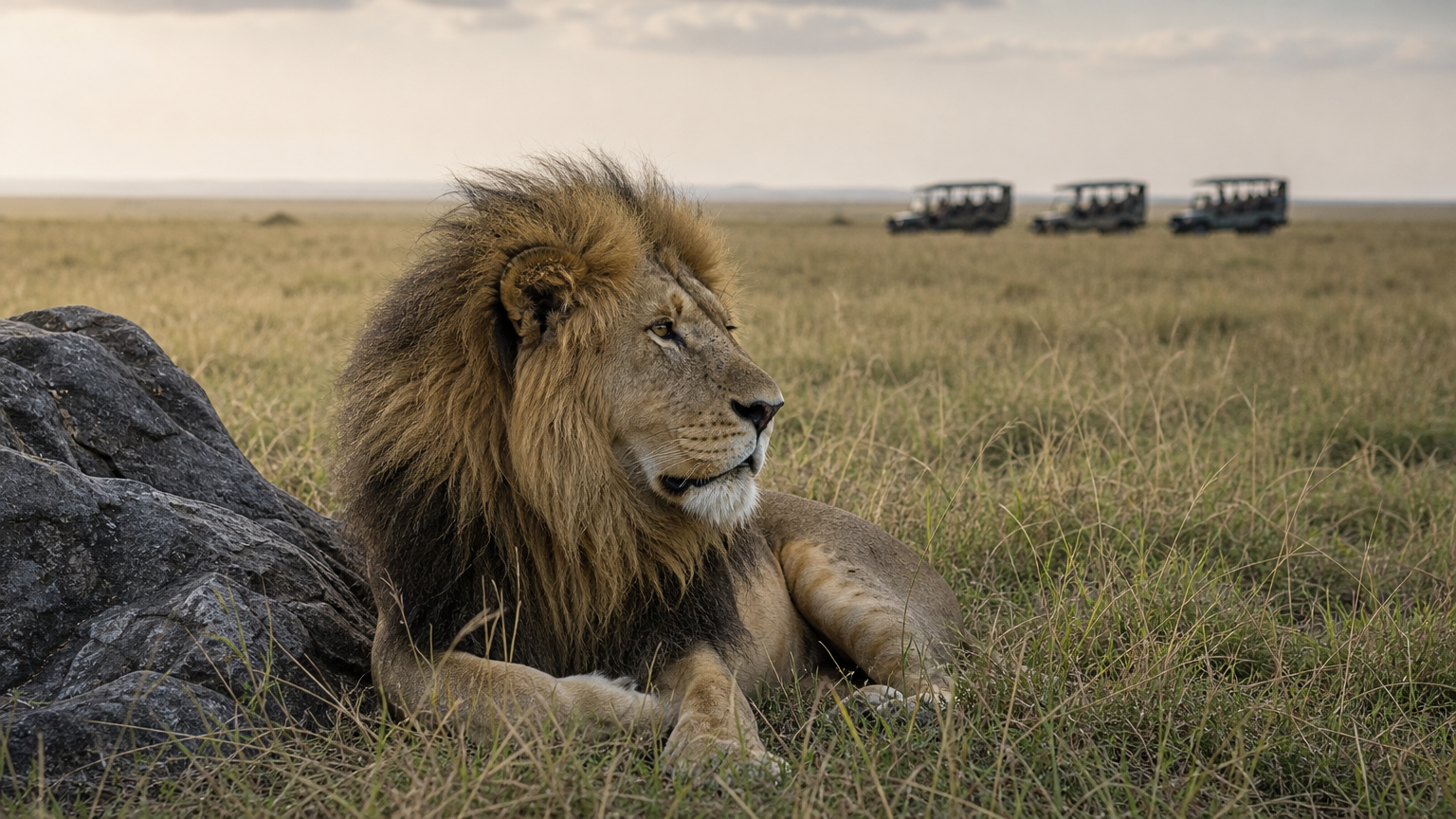
Kenya has a strong answer in its conservancies. The private and community conservancies around the Mara cap the number of vehicles at a sighting and allow night drives, walking safaris and off-road driving. The herds spend most of their time inside the reserve, though. Tanzania's equivalent is concession areas inside parks and community-managed zones on the park edges. The central Serengeti around Seronera is busy too, so quiet comes from choosing the north or west and from a guide who tracks animals instead of following radio calls.
Landscapes and signature places
Each country has places the other cannot match. A few of the best known:
- Kenya: the open plains of the Mara, Amboseli beneath Kilimanjaro, Lake Nakuru with its flamingos and rhinos, and Hell's Gate, where you can cycle among zebra.
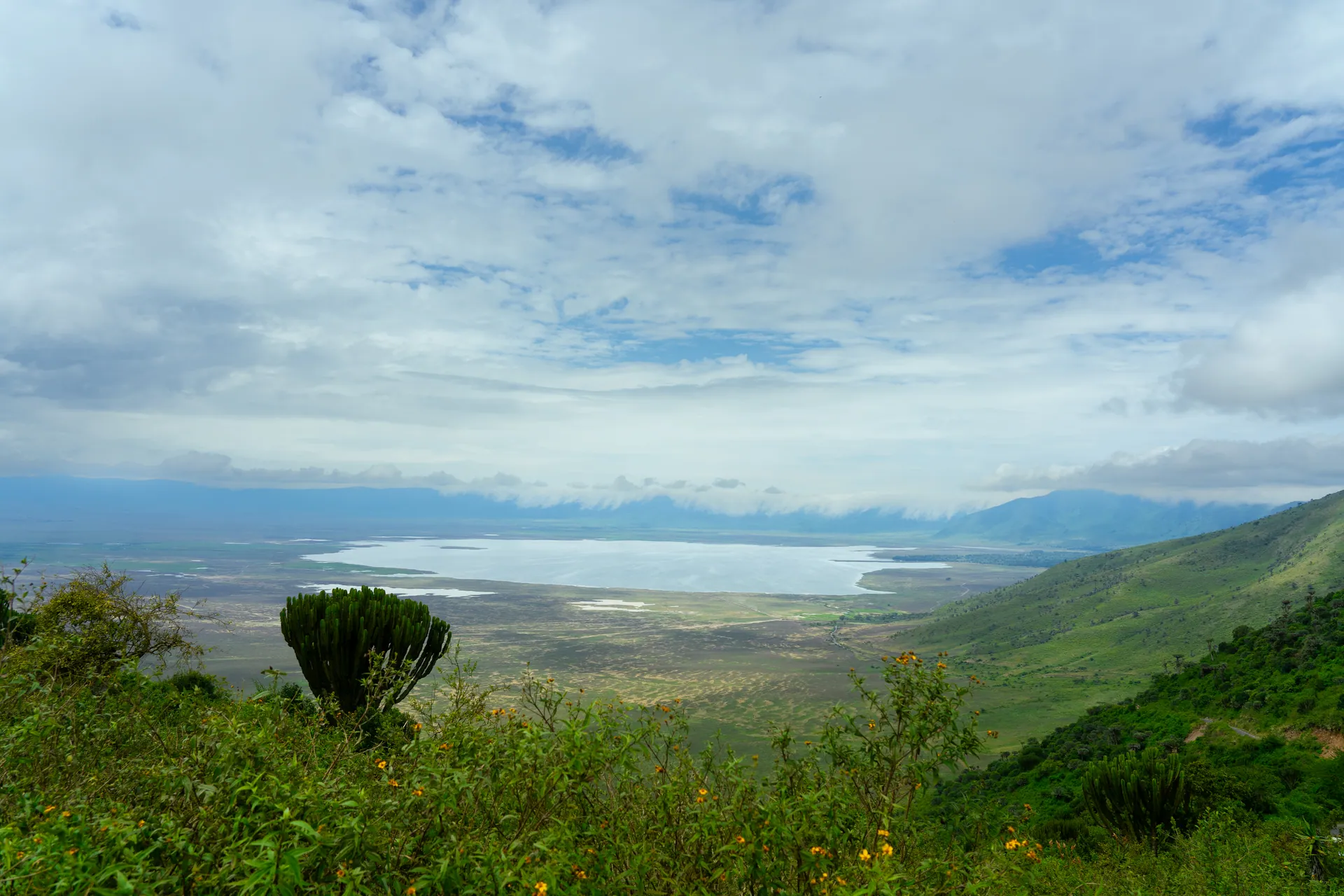
- Tanzania: the endless Serengeti plains, Ngorongoro Crater with its dense wildlife in a small space, Tarangire's baobabs and elephants, and the birdlife of Lake Manyara.
Kenya's scenery is more compact and often more open, which makes animals easy to spot. Tanzania varies more from park to park, which suits travelers who want a different landscape every couple of days.
Kenya is easier to see in a short time, while Tanzania repays travelers who want scale and variety.
Getting there, staying safe and entry rules
Flights and moving between parks
Nairobi's Jomo Kenyatta airport has more airlines and routes than Kilimanjaro International near Arusha. Plan on at least one connection to either airport from most U.S. cities, then check current schedules, because routes change. Tanzania's northern circuit is also served through Kilimanjaro with connections via major hubs such as Doha, Amsterdam and Istanbul.
Distances also differ. From Nairobi, the Mara is about five to six hours by road, or a short flight, and Amboseli is about four hours. In Tanzania, the Serengeti from Arusha is a long day by road, usually broken up with a stop at Tarangire or Ngorongoro. On a trip of seven days or fewer, consider a fly-in segment in Tanzania so that driving does not eat your game-drive time.
Safety on the safari circuit
Both countries run safe, well-established safari circuits, and your guide and operator matter most for day-to-day safety. Most risk sits in cities and on roads. Expect pickpocketing in busy parts of Nairobi, avoid driving at night, and use drivers who know the roads. Both countries have had unrest in recent years, such as street protests in Nairobi and tension around Tanzania's 2025 election.
Check the U.S. State Department travel advisory for each country before you book and again before you fly. Advisory levels change, and the guide who meets you at the airport will know about local conditions that you cannot see from home.
Entry rules and insurance
Both countries require most U.S. visitors to arrange a visa or electronic authorization before or on arrival, and the rules and fees change. Tanzania has also introduced mandatory inbound travel insurance rules for 2026, with a USD 44 fee. Before you travel, work through this checklist:
- Check passport validity (typically at least six months) and blank pages.
- Confirm the current visa or eTA process on each government's official site.
- Confirm the Tanzania inbound insurance rules and arrange your own comprehensive travel and medical cover.
- Ask a travel clinic about yellow fever and malaria guidance for your route.
Which trip style fits Kenya, and which fits Tanzania
A quick matching table
Match your priority to the country that serves it best:
| Your priority | Better pick | Why |
|---|---|---|
| First safari, one week or less | Kenya | Close parks, easy flights, reliable Big Five |
| Seeing a rhino up close | Kenya | Nairobi National Park, Lake Nakuru, Ol Pejeta |
| Calving season (January to March) | Tanzania | Southern Serengeti and Ndutu only |
| River crossings (July to October) | Either | Mara River borders both countries |
| Tighter budget | Kenya | Lower starting rates, more budget lodging |
| Walking safaris | Tanzania | More options in the southern parks and some northern ones |
| Beach after safari | Tanzania | Zanzibar is a short domestic flight away |
| Climbing | Tanzania | Kilimanjaro and Mount Meru |
| Families | Either | Kenya for short drives and Nairobi sanctuaries, Tanzania for cultural visits |
| Gorillas | Neither | Add Uganda or Rwanda |
Families should weigh drive times most. Children cope well with Kenya's compact routes, and our nine-day Tanzania family safari covers Tarangire, Lake Manyara and a visit with the Hadzabe people.
Kenya, Zanzibar and other alternatives
Kenya or Zanzibar is not really a like-for-like choice. Zanzibar is a beach island and part of Tanzania, so it pairs with a Tanzanian safari by short flight rather than competing with it. Kenya has its own coast, with beaches such as Diani, but the safari-plus-beach combination is simpler in Tanzania.
If you are weighing Kenya and Tanzania against South Africa, the difference is in style. South Africa offers self-drive parks and malaria-free private reserves, while East Africa offers the migration, bigger landscapes and a stronger guided-safari culture. Self-driving is not recommended in Kenya or Tanzania, so a guide is part of the cost.
Combining Kenya and Tanzania in one safari
When a combined trip works
Combining both countries works best with eight days or more. The Mara and the Serengeti are one ecosystem, so a route through both lets you follow the herds, see Kenya's rhinos and Amboseli elephants, and still reach Ngorongoro and Tarangire. Anything shorter risks turning the trip into a series of transfers.
The main trap is trying to see every park. Each extra stop adds half a day of travel, and the animals on offer overlap heavily. Pick two or three anchor parks and give each at least two nights. Ask how your operator handles the border, whether by road or by flights between airstrips, and whether the vehicle and guide change.
Our Kenya and Tanzania combinations
We run three combinations, and the right one depends on how many days you have:
| Itinerary | Length | Route |
|---|---|---|
| 6-Day Kenya & Tanzania Mid-Range Safari | 6 days | Masai Mara, Serengeti and Ngorongoro Crater, starting and finishing in Arusha |
| 8 Days Kenya & Tanzania Safari | 8 days | Nairobi, Masai Mara, Serengeti, Ngorongoro Crater, Mto Wa Mbu village visit and Tarangire |
| 10 Days Best of Kenya & Tanzania Safari | 10 days | Lake Nakuru, Masai Mara, Serengeti, Ngorongoro, Tarangire and Amboseli, with international flights that you book yourself to and from Jomo Kenyatta airport |
The six-day Kenya and Tanzania mid-range safari is a private safari with a professional guide. The eight-day route is the one where a Serengeti balloon flight sits on day five as an optional extra.
Combine the countries only if you have eight days or more, and keep to two or three anchor parks.
How to choose between Kenya and Tanzania
A five-step decision
Work through these steps in order, because the early ones narrow the later ones:
- Fix your travel month. If it falls between January and March, Tanzania is the choice. From July to October, either works.
- Count your days. With six days or fewer, favor Kenya or a fly-in Tanzania route. With eight or more, consider combining.
- Rank your top three priorities. Rhinos, calving, beach, walking safaris, budget or photography will each point toward one country.
- Set a full budget. Include flights, tips, insurance, visas, a balloon flight and any internal flights, not just the daily rate.
- Choose the guide and operator. Read reviews, ask how long guides have worked the parks you want, and ask about vehicles and pacing.
If two steps point to different countries, let the month win first and the priority second. The wrong season spoils a trip faster than the wrong border does.
What to ask before you book
Most disappointment comes from details that were never discussed. Ask these questions before you pay anything:
- Is the vehicle private, and is it a 4x4 with a roof that opens for viewing? We use our own Toyota Land Cruisers.
- What is included in the price, such as park fees, accommodation, game drives and ground transport?
- What are the payment and cancellation terms? Ours are a 30% deposit within 14 days of invoice, the balance 21 days before arrival, and cancellation fees that rise from 30% up to 60 days before arrival.
- Is medical evacuation included? We include AMREF Flying Doctors evacuation on safaris and treks, and we require comprehensive travel insurance.
- Who books your international flights? We do not, so you can pick your own routing.
Book early if the river crossings or calving season are your goal, because peak camps fill 12 to 18 months ahead. A reputable operator will tell you honestly if your month, budget and wish list do not fit together.
Pick the month first, the country second and the guide before either.
Making the call
Kenya and Tanzania give you the same wildlife in different packages. Kenya is easier, closer together, a little cheaper and better for rhinos. Tanzania is bigger, quieter, better for calving season and Ngorongoro, and the natural partner for Zanzibar or Kilimanjaro. If you have eight days or more, a trip through both gets you the best of each.
Your travel month, your trip length and your guide will shape the experience more than the country on your itinerary. If you want help matching your dates to a route, talk to our team about our private eight-day Kenya and Tanzania safari and we will build the itinerary around what you most want to see.