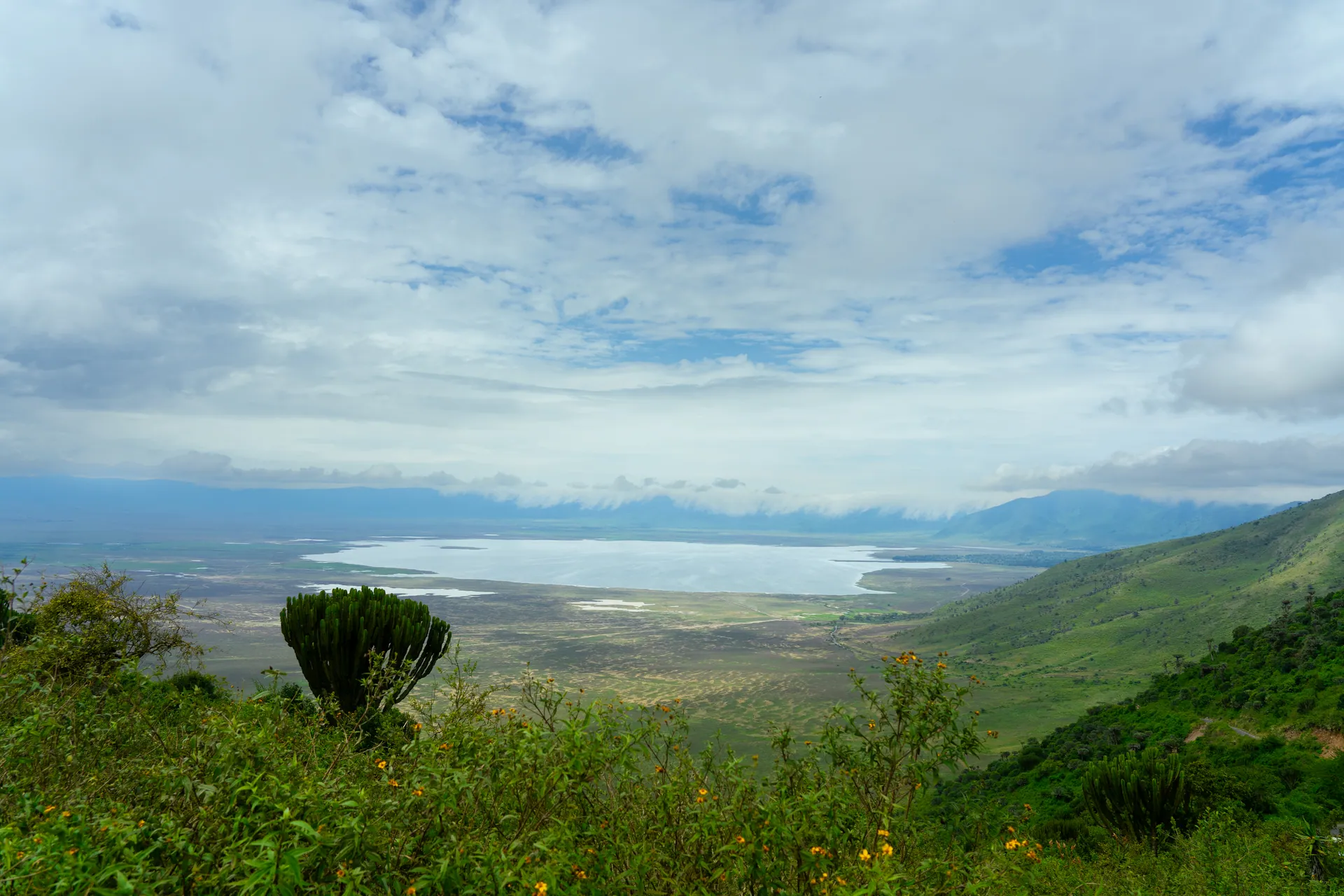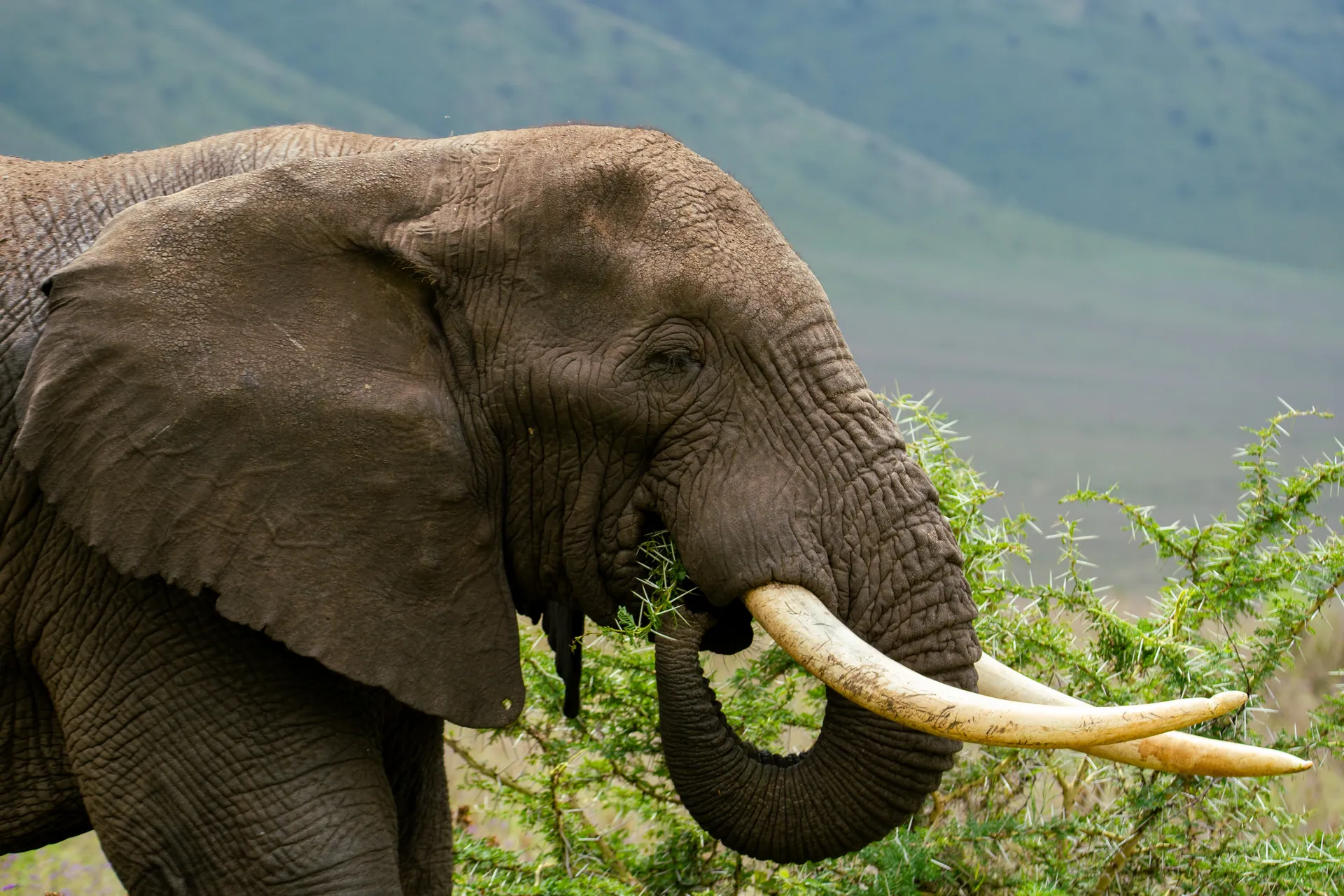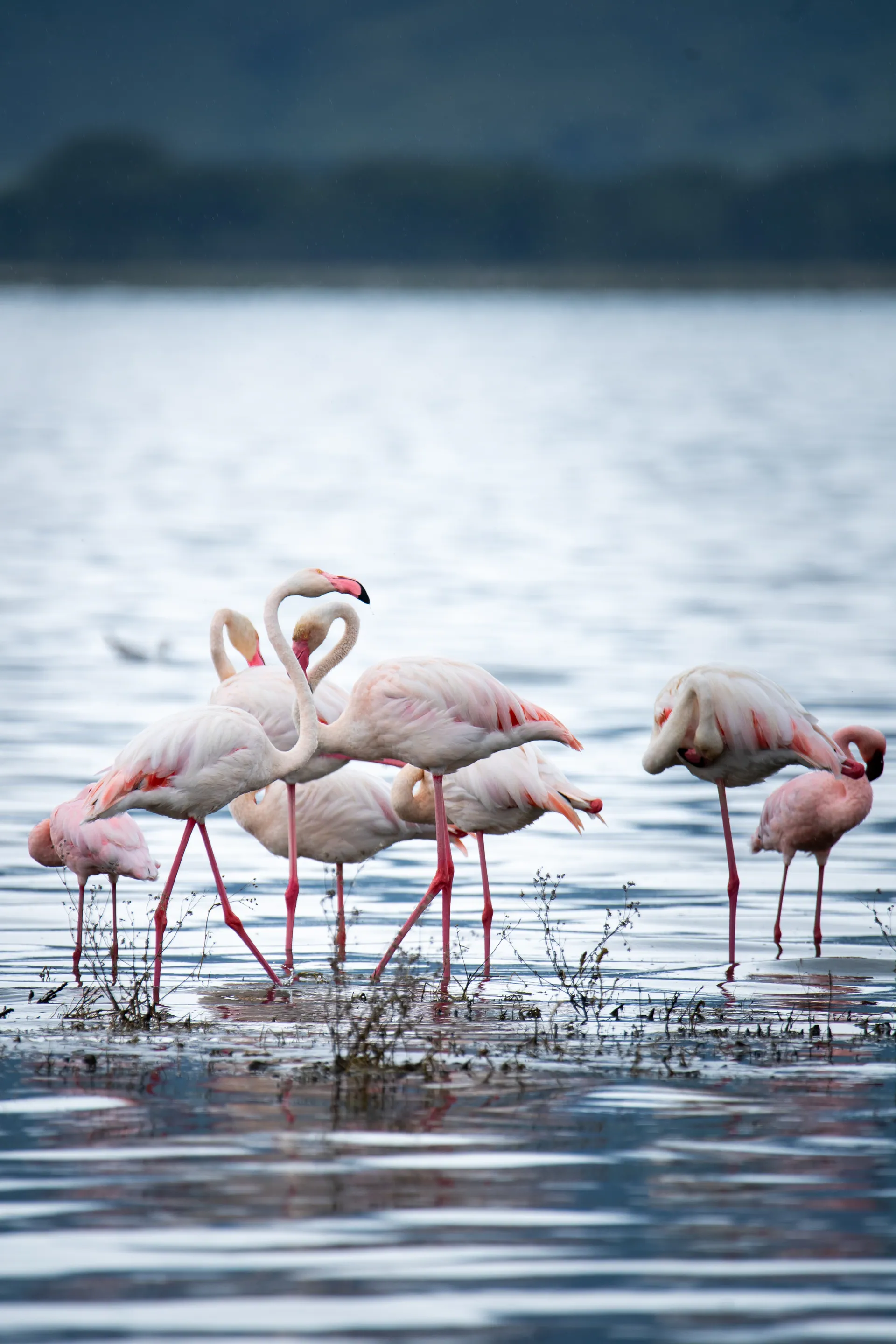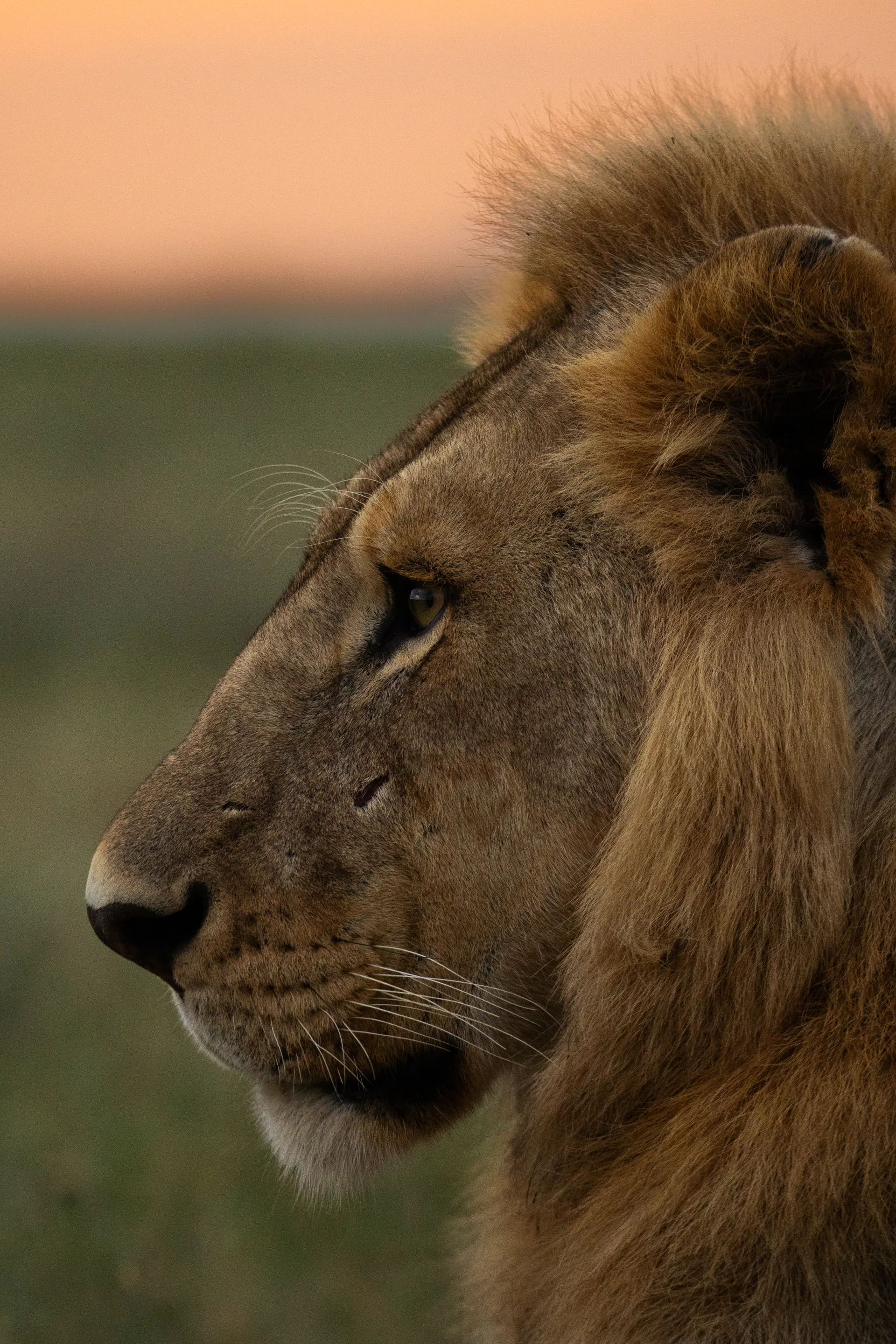
The Great Migration is the reason many travelers book a Serengeti migration Tanzania safari. About 1.5 million wildebeest, along with hundreds of thousands of zebra and gazelle, walk a clockwise loop through the Serengeti-Mara ecosystem all year, following rain and fresh grass. It has no start date and no finish line, so the best time to go depends on what you want to see: calving in January to March, or river crossings from July to October.
This guide goes past the definition. You will learn why the herds move, where they are in every month, how to match a season to your goals, and how to plan the trip itself, including nights, camps, costs, and the Serengeti versus Masai Mara question.
We are Passionate Guides Tanzania, a small operator based in Arusha. Our founder grew up in the Maasai Steppe and has guided across Tanzania since 2012, so the advice below comes from working alongside these herds with guests, not from reading about them.
Why the Serengeti migration is worth planning around
The Serengeti migration is worth planning around because it is the largest overland movement of large mammals on Earth, and it decides where the best wildlife viewing is in any given month. If you know why the herds move, you can predict where they will be far better than a fixed calendar can.
What drives the herds
Rain and grass drive everything. Wildebeest need fresh, short, protein-rich grass, and pregnant and nursing females need it most. The southern plains around Ndutu grow it on volcanic soils after the short rains, which is why the herds gather there to calve. When those plains dry out around April and May, the herds head north and west toward taller grass and permanent water, then loop back south once the rains return.
The loop covers hundreds of miles, but it is a response to weather and not a schedule.
The herds follow the rain, not the calendar, so every date you read is a pattern and not a promise.
Who takes part
Wildebeest get the headlines, but the migration is a whole community of grazers and hunters moving together:
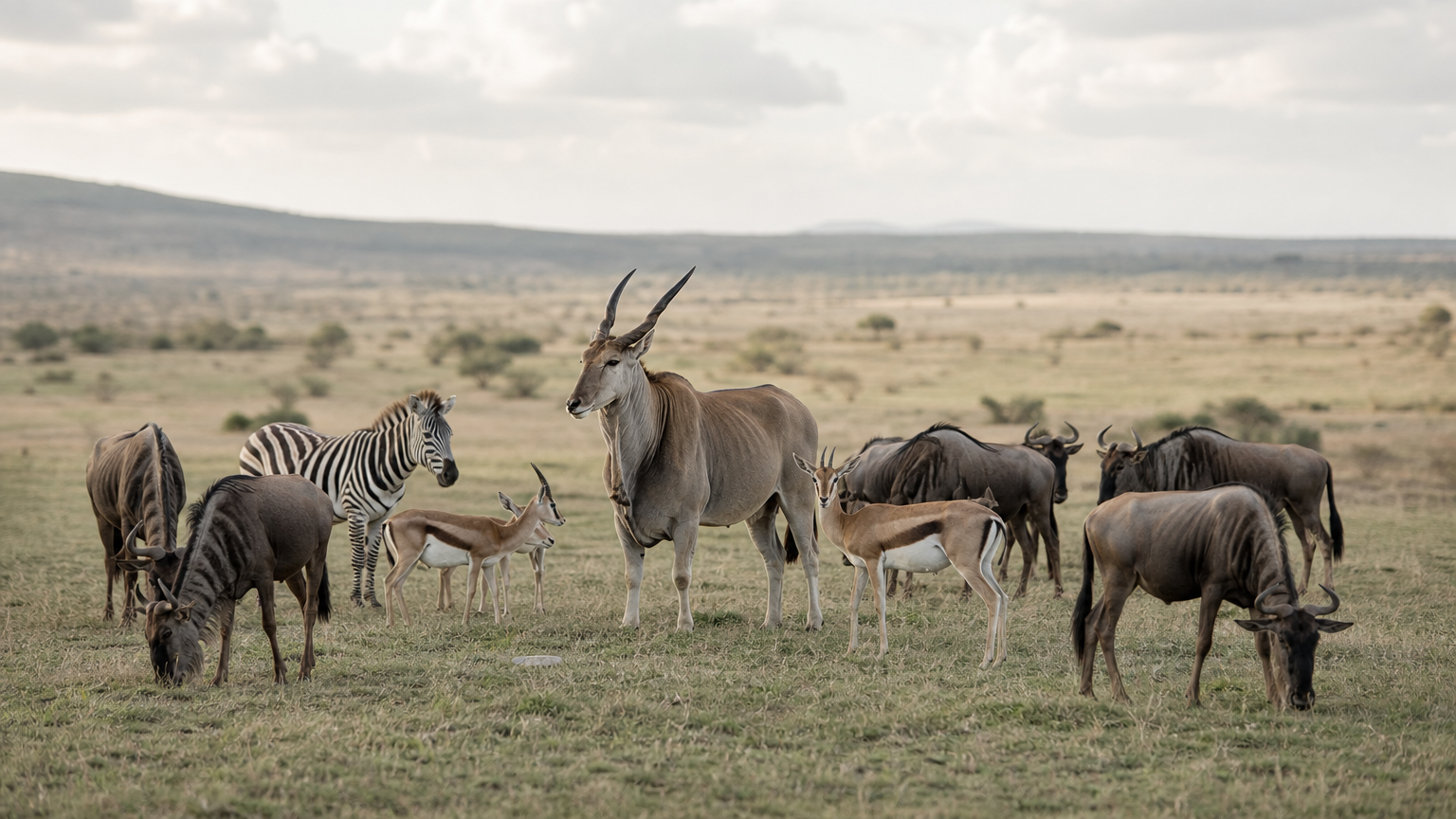
- Wildebeest: roughly 1.5 million animals, with about half a million calves born each year.
- Zebra: hundreds of thousands, usually walking ahead and cropping the tall grass first.
- Gazelles and eland: Thomson's and Grant's gazelles, plus eland, in smaller numbers.
- Predators: lions, hyenas, cheetahs, and leopards on land, and Nile crocodiles waiting at the Grumeti and Mara rivers.
Those predators matter to your trip. The Serengeti has one of the largest lion populations in Africa, and calving season and river crossings concentrate the hunting action in places you can reach in a single game drive.
What it means for your safari
For you as a traveler, the migration means the Serengeti is never empty. Even when the main herds are a day's drive away, resident lions, leopards, elephants, giraffes, and buffalo are there all year. The migration adds a seasonal headline act that you can choose to follow.
The practical result is that you pick a phase, not a date. Calving, the Grumeti crossings, the Mara River crossings, and the quiet return south each make a different trip. The sections below show how to choose.
Where the herds are, month by month
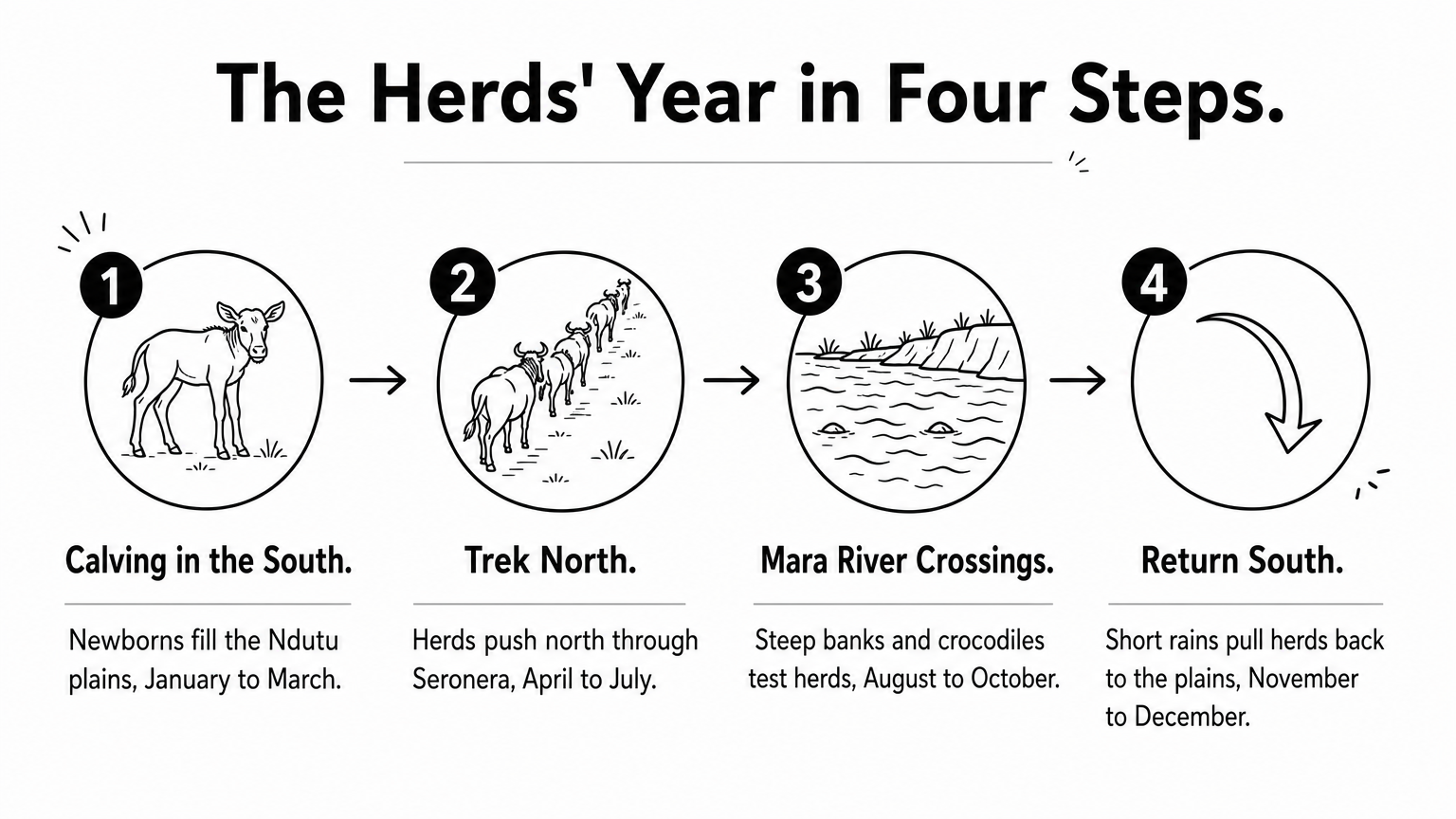
Expect the herds to move clockwise. They calve in the south from January to March, push north through the central Serengeti and the Western Corridor from April to July, reach the Mara River in the north by August, and turn south again from October. This is the typical pattern for the wildebeest migration in Serengeti, and rain can shift it by weeks.
The year at a glance
Use the table to decide where to base yourself in each month. It shows where the main bulk of the herds usually is, while splinter groups are often elsewhere.
| Month | Usual location | What is happening |
|---|---|---|
| January | Southern plains, Ndutu | Herds graze short grass, calving begins |
| February | Southern plains, Ndutu | Peak calving, heavy predator activity |
| March | Southern plains | Calves grow, herds still on short grass |
| April | Central Serengeti, Moru Kopjes | Long rains arrive, herds start north |
| May | Central Serengeti, Seronera | Long columns head toward the west |
| June | Western Corridor | Herds mass south of the Grumeti River |
| July | Western Corridor and north | Grumeti crossings, lead herds go north |
| August | Northern Serengeti | Mara River crossings begin |
| September | Northern Serengeti and Mara | Crossings in both directions |
| October | Northern Serengeti, Lobo | Herds turn south |
| November | Lobo and eastern Serengeti | Short rains pull herds toward the plains |
| December | Southern plains, Ndutu | Herds return for the next calving season |
What happens in each phase
Calving season, January to March, fills the short-grass plains of the southern Serengeti and the Ndutu area with newborns. Most calves arrive within a few weeks in February, and a calf can stand within minutes of birth. Lions, hyenas, and cheetahs work the edges of the herd, so predator sightings are frequent and easy.
From April to July, the herds trek north in long columns through the Moru Kopjes and Seronera areas. By June they mass on the south bank of the Grumeti River in the Western Corridor and cross in surges. These crossings are smaller than the Mara's, but you share them with far fewer vehicles.
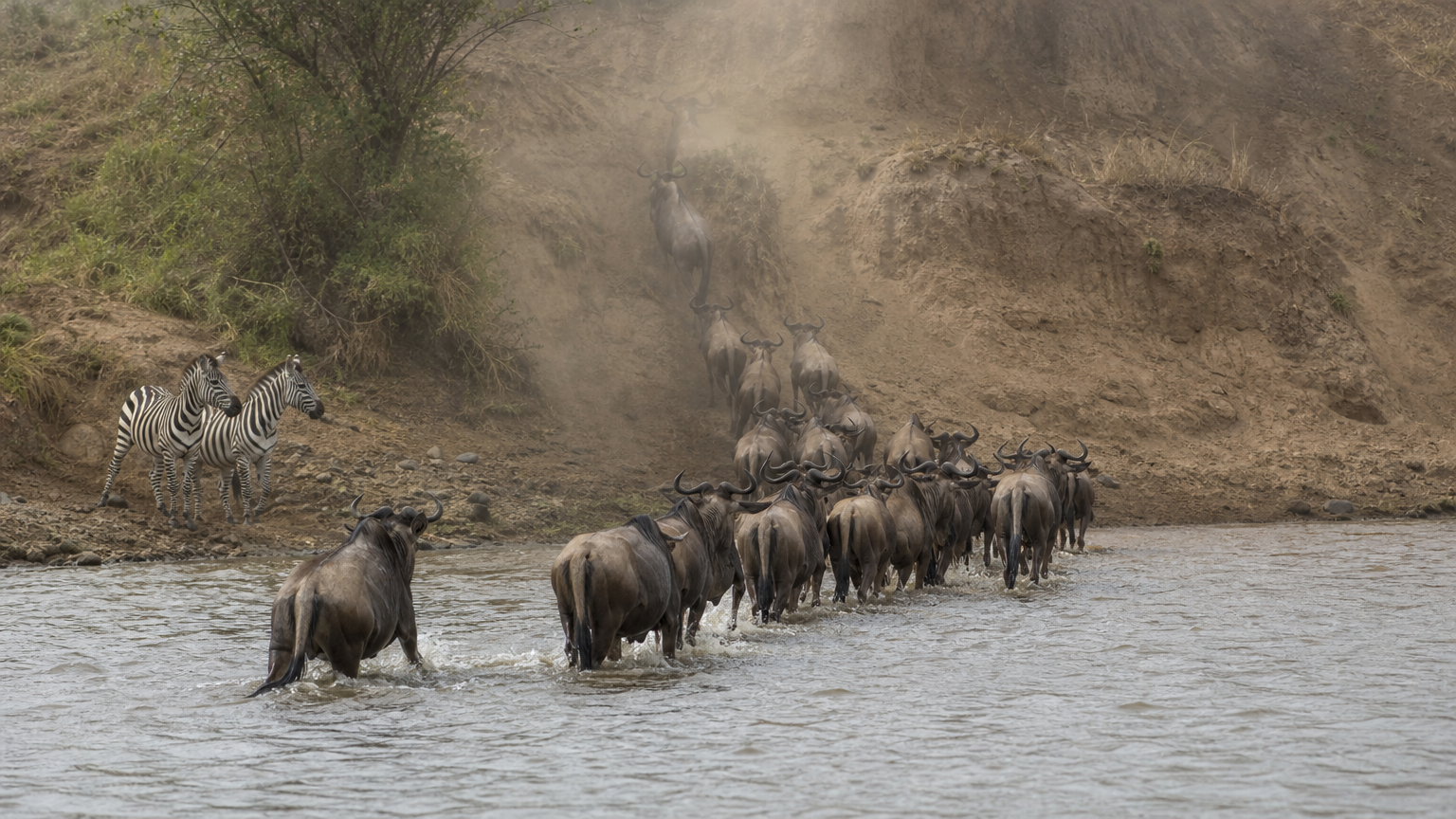
August to October brings the herds to the northern Serengeti, where the Mara River is the biggest obstacle of the loop. Steep banks and crocodiles make the crossings tense and unpredictable. Herds often cross north and then back south days later, and a large part of the population stays on the Tanzanian side instead of entering Kenya.
By November, the short rains pull the herds through Lobo and the eastern Serengeti. They arrive back on the southern plains in December, and the cycle starts again. Vehicle numbers are low, so this phase suits travelers who value space over spectacle.
Calving in the south, crossings in the north: the Serengeti migration Tanzania offers is two headline events joined by a long walk.
Best time to see the Great Migration in the Serengeti
When is the Great Migration in the Serengeti? Every month, because the herds never leave the ecosystem. The better question is which phase you want, and the answer is calving for newborns and predators, or late July to September for Mara River crossings.
Best months by what you want to see
Match your priority to the months below. Each row also lists the main trade-off, because the best time for one goal is rarely the best for another. In this table, the Great Migration in Serengeti is the same animals in a different place.
| What you want | Best months | Where | Trade-off |
|---|---|---|---|
| Calving and newborns | Late January to March, peak in February | Ndutu and southern plains | Popular, so camps fill early |
| Grumeti crossings | June to July | Western Corridor | Smaller spectacle, fewer vehicles |
| Mara River crossings | Late July to September, sometimes October | Northern Serengeti | Highest rates, most vehicles |
| Quiet and green | April to May, November | Central and eastern Serengeti | Herds on the move, less concentrated action |
The honest answer on timing risk
No guide can promise a river crossing. Herds can stand at the water's edge for days, cross at dawn, or turn back. Rain that arrives early or late shifts the whole cycle by weeks, so any operator's dates are guidelines and not guarantees.
You can improve your odds in two ways. First, allow at least three full days in the area where the herds should be, because one day can easily be a dry one. Second, travel with a private guide who can change the plan each morning based on sightings shared by other guides and rangers. Flexibility is the best protection against bad timing.
Book the phase, stay long enough to absorb a few quiet days, and the herds will usually reward you.
How to plan your Serengeti migration safari
To plan a Serengeti migration safari, choose your phase first, then build four to five nights in the matching region into a seven to ten day trip, and book camps early. Everything else, from park combinations to budget, follows from those choices.
Choose nights and a base
Start with the phase, because it sets the region and the camps. Work through these steps in order:
- Pick your phase: calving, Grumeti crossings, Mara crossings, or the quiet months.
- Pick the region: Ndutu for calving, the Western Corridor for June and July, the north for August to October.
- Choose a camp near the herds: seasonal tented camps such as Kontiki Ndutu put you close to the calving plains.
- Add other parks: Ngorongoro Crater and Tarangire fit well before or after the Serengeti.
- Book early: the best camps for February and the crossing months fill many months ahead.
Our 8-day calving season itinerary follows this logic, with enough nights in the south to absorb a rain delay.
Serengeti or Masai Mara
The Serengeti is the better base for most first-time visitors. Serengeti National Park is roughly ten times larger than the Masai Mara National Reserve, and the herds spend most of the year on the Tanzanian side. That includes the entire calving season, the Grumeti crossings, and many Mara River crossings.
The Masai Mara earns its place in August to October, when large numbers of animals move into Kenya. If you have the time, combine both countries, which is how our Kenya and Tanzania itineraries work. If you want only one, choose the Serengeti for calving and the Mara for a Kenya-focused trip.
What a migration safari costs
Cost depends on when you travel and how you travel. February and the July to October crossing months are the most expensive, while April, May, and November usually offer better rates for the same wildlife. These are the main drivers:
- Season: peak months raise camp and lodge rates.
- Accommodation level: mid-range tented camps cost far less than luxury camps.
- Trip length: more nights lower the daily cost of flights and transfers.
- Private or shared vehicle: a private guide and vehicle cost more but give you control of your day.
- Entry rules: check current Tanzania requirements, including mandatory inbound travel insurance, before you travel.
Ask any operator for a written quote that separates park fees, accommodation, vehicle, and flights, so you can compare offers honestly.
Plan around the herds, not the date
The Serengeti migration is a year-round loop driven by rain and grass, not a single event with a fixed date. Calving in the south runs from January to March, river crossings in the north from July to October, and the months between them are quieter, greener, and often better value. Pick the phase that fits your goals, allow enough nights, and stay flexible.
If you want help choosing the right month and camps, talk to our team at Passionate Guides Tanzania. We will build a private, guided itinerary around where the herds are likely to be, and we will tell you plainly when a month is a gamble.