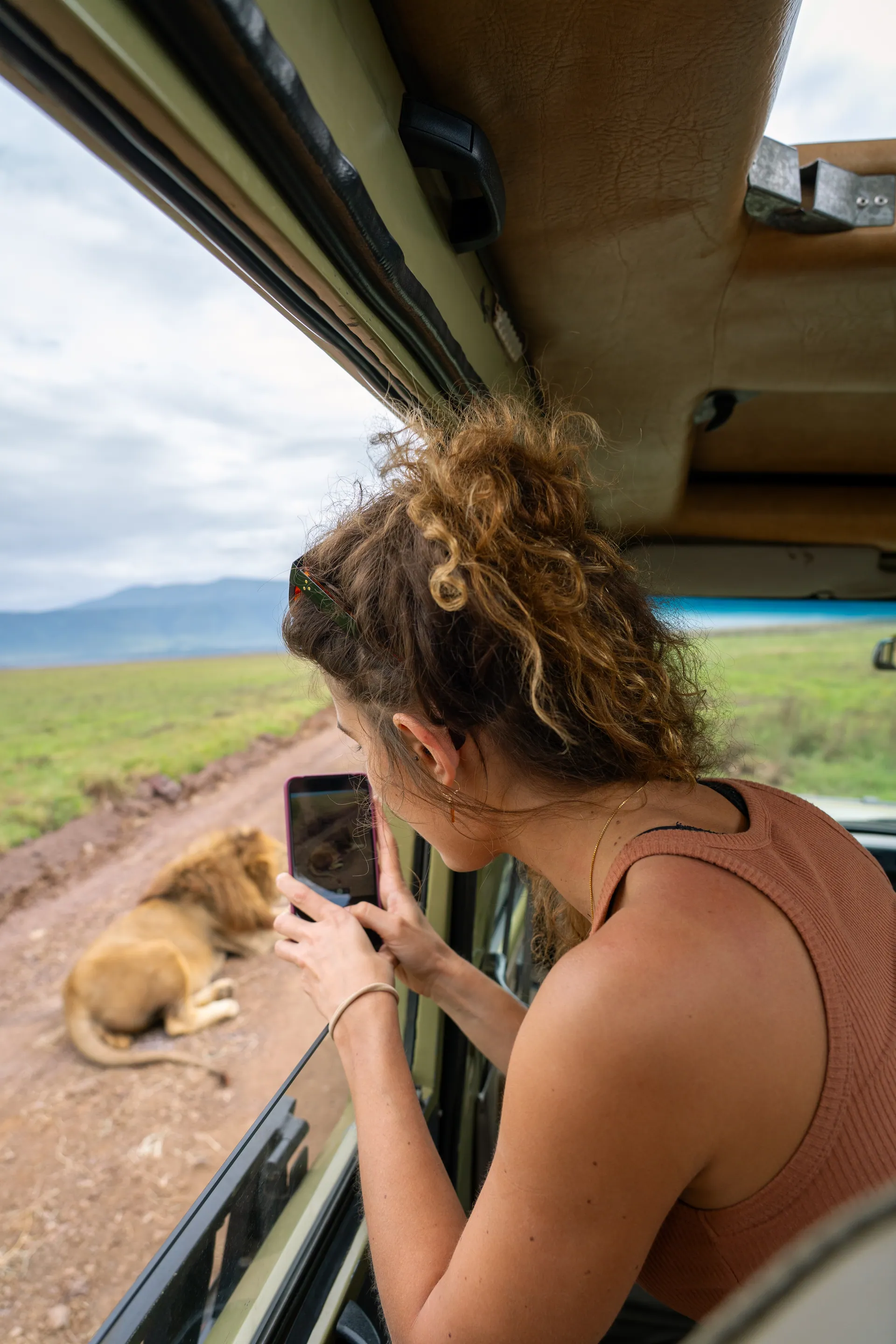
Tanzania safari all inclusive packages bundle your lodging, park fees, guide, vehicle, meals and game drives into one price, so you pay once instead of piecing the trip together. The term has no legal definition, though. One operator's all-inclusive covers drinks and airport transfers, while another's stops at a bed and a jeep. A real package should cover everything from the moment you land in Tanzania until you fly out, except flights, visas, tips and personal extras.
This guide explains why the format makes sense, how to compare offers line by line, what is usually covered and left out, what you should expect to pay, and what real itineraries look like. You will finish with a checklist you can run against any quote.
Passionate Guides Tanzania is a locally owned operator in Arusha, and the founder has guided in Tanzania and Kenya since 2012. We use that experience to show you what to ask, whoever you book with.
Why all-inclusive Tanzania safari packages are worth it
All-inclusive packages matter because a safari's cost is scattered across dozens of small items, and a package turns them into one number you can budget. For a first safari, that clarity is usually worth more than the few dollars you might save by assembling pieces yourself.
One price instead of a dozen line items
A northern Tanzania safari involves park fees charged per person per day, a vehicle, a driver-guide, lodging, meals, transfers and taxes. Park fees alone are significant. In the Serengeti, they run roughly $80 or more per adult per day, so several nights there add hundreds of dollars before you pay for a bed. When a package lists these items, you can see where your money goes.
A good package is not the cheapest quote. It is the one where every cost you will meet in Tanzania is already on the page.
Fewer decisions once you land
Safari lodges and camps sit hours from the nearest town. Nobody wants to haggle over fees at a park gate or work out dinner plans in the bush. With a package, your guide handles gate formalities and logistics, and your meals are arranged in advance.
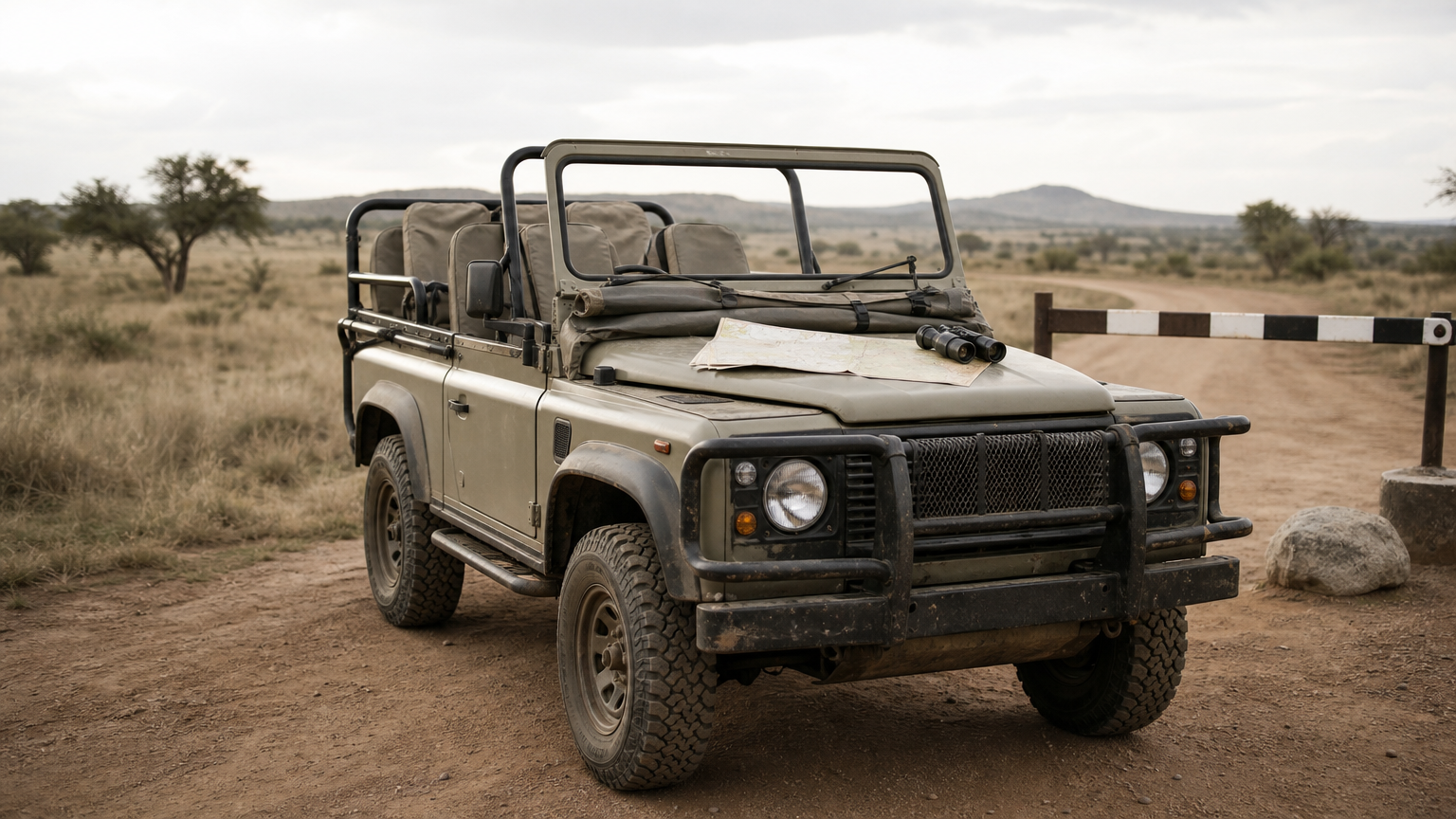
The trade-off is flexibility. A rigid fixed-departure package can feel hurried. A private all-inclusive safari keeps the convenience and lets you set the pace, which is why we recommend it for families and first-timers.
How to choose and compare a package
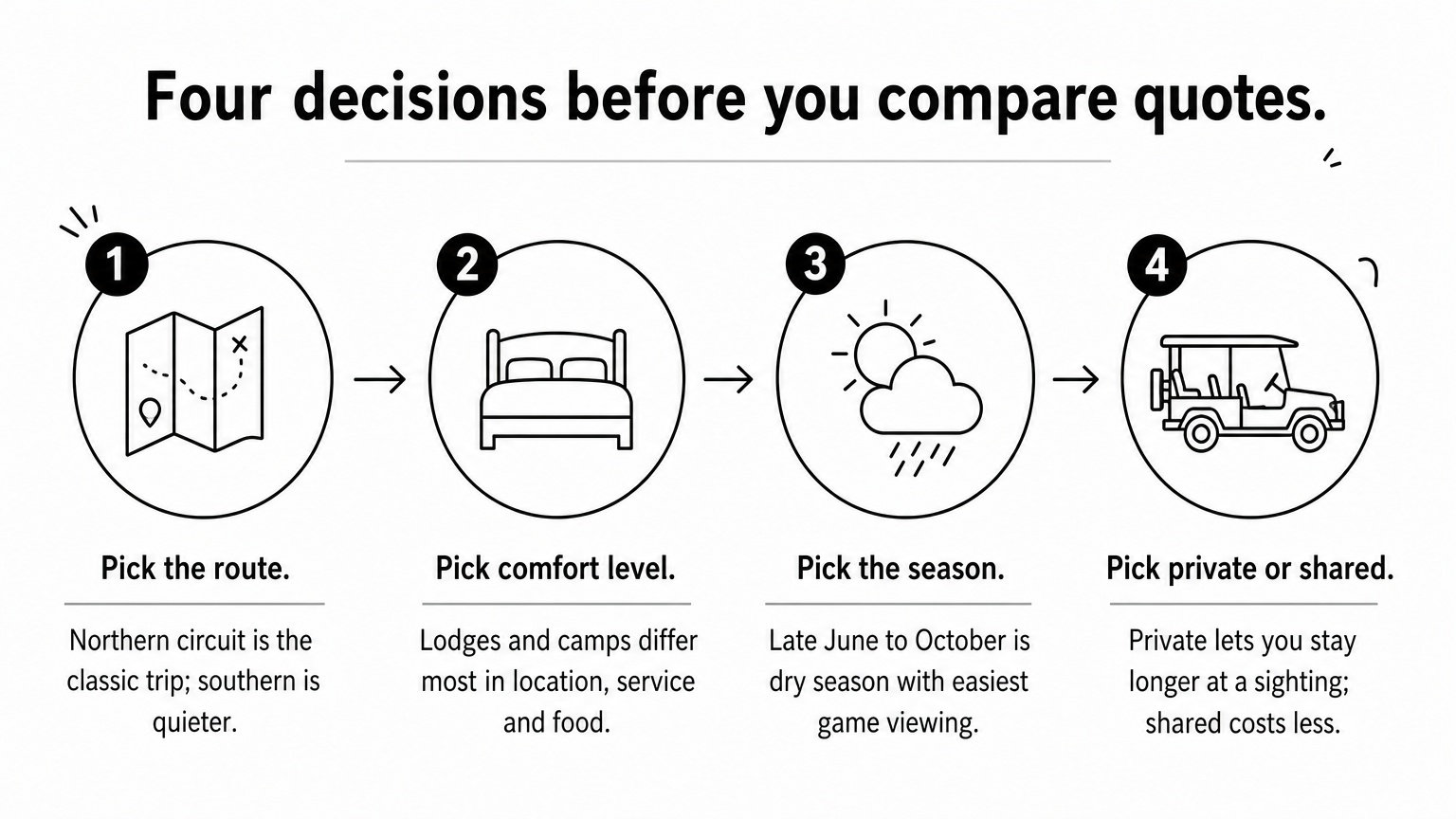
To choose a package, settle four trip decisions first, then test each quote against a short list of questions. Comparing price before you know what you want only tells you which operator cut the most corners.
Four decisions that narrow the field
- Pick the route. The northern circuit (Tarangire, Lake Manyara, Serengeti, Ngorongoro Crater) is the classic 6 to 8 day trip. The southern circuit (Nyerere/Selous and Ruaha) is quieter and often involves fly-in transfers.
- Pick the comfort level. Mid-range lodges, luxury lodges and luxury tented camps differ most in location, service and food.
- Pick the season. Late June to October is the dry season with the easiest game viewing. January and February suit the calving in the southern Serengeti. April and May bring heavy rain and lower prices.
- Pick private or shared. A private vehicle lets you stay longer at a sighting. A shared one costs less but follows a group's schedule.
Questions that expose a thin package
Ask every operator the same questions and compare the answers side by side:
- Are the lodges named, or does the quote say "or similar"?
- Is the vehicle private, and does every traveler get a window seat?
- Are park fees for non-residents included, and are all taxes and VAT in the price?
- Which drinks are included, and which are excluded?
- Is medical evacuation covered?
- What are the deposit, balance and cancellation terms?
Vague answers to these are a warning. Specific ones suggest the operator has done this many times.
What an all-inclusive package covers and what it skips
A solid package covers lodging, park fees, a guide, ground transport, meals, taxes and airport transfers. It almost never covers international flights, visas, tips or travel insurance. This table shows the usual split.
The usual split between included and extra
| Item | Usually included | Usually extra |
|---|---|---|
| Accommodation | Lodges or tented camps on the route | Upgrades, extra nights before or after |
| Park fees | Non-resident fees for the parks visited | None, if the quote is honest |
| Guide and vehicle | Private driver-guide and 4x4 | Optional add-ons |
| Meals and drinks | Meals and drinks as the itinerary specifies | Premium spirits, vintage champagne |
| Airport transfers and taxes | Round-trip transfers, taxes and VAT | None |
| Activities | All listed game drives | Optional extras such as a balloon safari |
| International flights | No | Always extra |
| Visa, tips, insurance | No | Always extra |
Our own packages follow this pattern. They include park fees, game drives, accommodation, a professional guide, ground transportation, roundtrip airport transfers and all taxes. Alcohol is included except for premium spirits and vintage champagnes. We also include AMREF Flying Doctors evacuation on safaris and treks. Travel insurance is mandatory, and Tanzania's inbound travel insurance requirement carries a fee, listed at USD 44 for 2026.
If a quote does not name what is excluded, assume the exclusions are longer than you think.
Flights, "with airfare" packages and Zanzibar
Many travelers search for packages with airfare or flights from the USA. Those bundles usually come from travel agencies that add flights to a ground package. Booking flights yourself lets you pick the airline and routing, and you can still land in Kilimanjaro, close to Arusha, where most northern trips begin. Our packages do not include international flights.
A Zanzibar beach extension works the same way. It is a separate stay with its own cost. Add it after the safari so you finish the trip resting, not rushing.
What all-inclusive packages cost in Tanzania
Expect roughly $250 to $1,500 or more per person per day, depending on comfort level, with most mid-range private safaris falling between $400 and $650. These are market ranges, so treat them as a sanity check and always get an itemized quote.
Price tiers per person per day
| Style | Typical range per person per day | What it usually means |
|---|---|---|
| Budget | $250 to $350 | Basic lodges or camping, often a shared vehicle |
| Mid-range | $400 to $650 | Comfortable lodges or tented camps, private vehicle |
| Luxury | $750 to $1,500+ | Top lodges, fly-in options, premium service |
Dry-season dates sit at the top of each band. Solo travelers pay more per person because the vehicle and guide are split fewer ways. A group of four pays less each than a couple.
A worked example for two travelers
Take a 7-day mid-range private safari at $500 per person per day, with flights and extras added on top. These are illustrative figures.
| Item | Per person | Two travelers |
|---|---|---|
| Safari package (7 days at $500) | $3,500 | $7,000 |
| International flight | $1,500 | $3,000 |
| Visa, insurance, tips | $400 | $800 |
| Total | $5,400 | $10,800 |
The package is about two thirds of the real trip cost. Budget for the rest before you compare quotes.
How the season changes the price
The best month to go depends on what you want to see. July to October is the dry season with strong game viewing and the highest prices. February suits the calving in the southern Serengeti. April and May cost less, but the rain makes some roads and camps harder to enjoy.
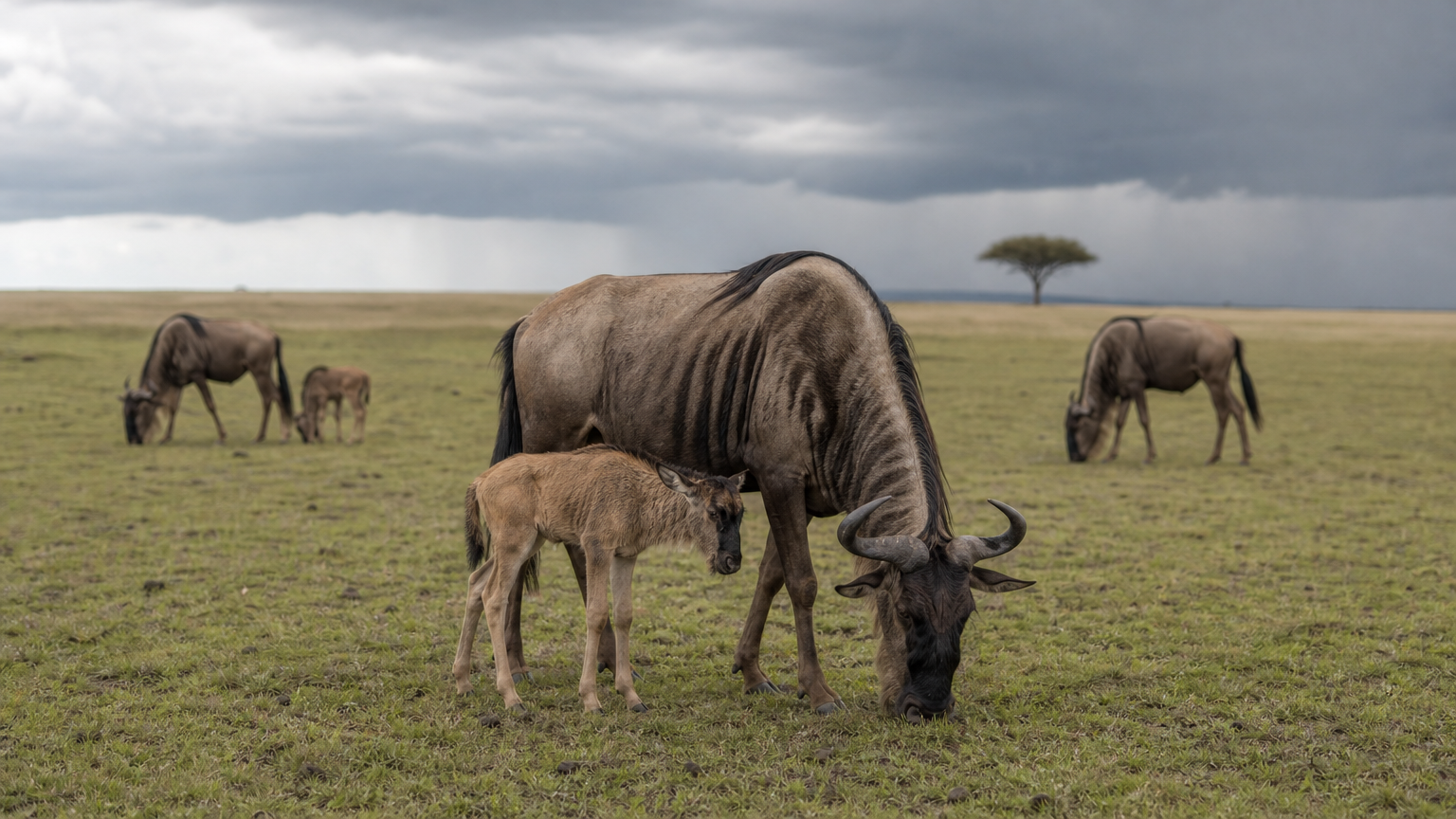
Price a safari for the month you want to see animals, not the month that looks cheapest.
Examples of all-inclusive itineraries and booking terms
Real itineraries show how length, route and style turn into a package. These five private trips from our range all start with a professional guide.
Five itineraries side by side
| Package | Days | Route | Style |
|---|---|---|---|
| Wildlife & Cultural Safari | 6 | Lake Manyara, Serengeti, Ngorongoro Crater, Lake Eyasi | Mid-range or luxury lodges, luxury tented camps |
| Tanzania Classic Safari | 7 | Tarangire, Lake Manyara, Serengeti, Ngorongoro Crater | Mid-range or luxury lodges, luxury tented camps |
| Southern Serengeti Migration | 8 | Tarangire, Serengeti, Lake Ndutu, Ngorongoro, Lake Manyara | Best for February calving |
| Family Safari | 9 | Tarangire, Lake Manyara, Lake Eyasi, Serengeti, Ngorongoro, Kilimanjaro foothills | Flexible pacing, handpicked lodges |
| Southern Circuit | 7 | Nyerere (Selous) and Ruaha | Luxury tented camps, fly-in transfers |
The 7-day classic is the best starting point if you want a first Tanzania safari with the main parks in one trip. If you want Kenya in the same trip, we also run Kenya and Tanzania combinations.
Booking terms to compare
Payment rules matter as much as the inclusion list. We require a 30% deposit within 14 days of invoice, with the balance due 21 days before arrival, and we accept USD or EUR. Cancellations cost 30% up to 60 days before arrival, 75% from 60 to 30 days, and 100% at 30 days or less. Unused services are non-refundable. Compare these terms across operators, because they decide how much risk you carry.
Booking the right package
An all-inclusive Tanzania safari is only as good as its inclusion list. Settle your route, comfort level and season first, then compare itemized quotes against the same questions. Remember that flights, visas, tips and insurance sit outside almost every package, so plan for them from the start.
If you want a private trip built around your dates and budget, ask for a custom Tanzania safari itinerary and we will send you a clear, itemized plan.